XHALE CHRONICLES
Lov.3 (Love Everlasting)
Letters from Xhale — Words that breathe. Stories that linger.
Lov.3 began with a question I couldn’t let go — what if love refused to accept death as its ending? Not as fantasy. Not as horror. But as the most natural thing in the world. Some love is stubborn enough to find another way home. This story is for everyone who has ever loved someone and refused to believe that was the end of it.
Letters from Xhale — Words that breathe. Stories that linger.
Lov.3 (Love Everlasting)
An independent short story from the Xhale Chronicles literary universe.
Part One — The Beginning (1920)
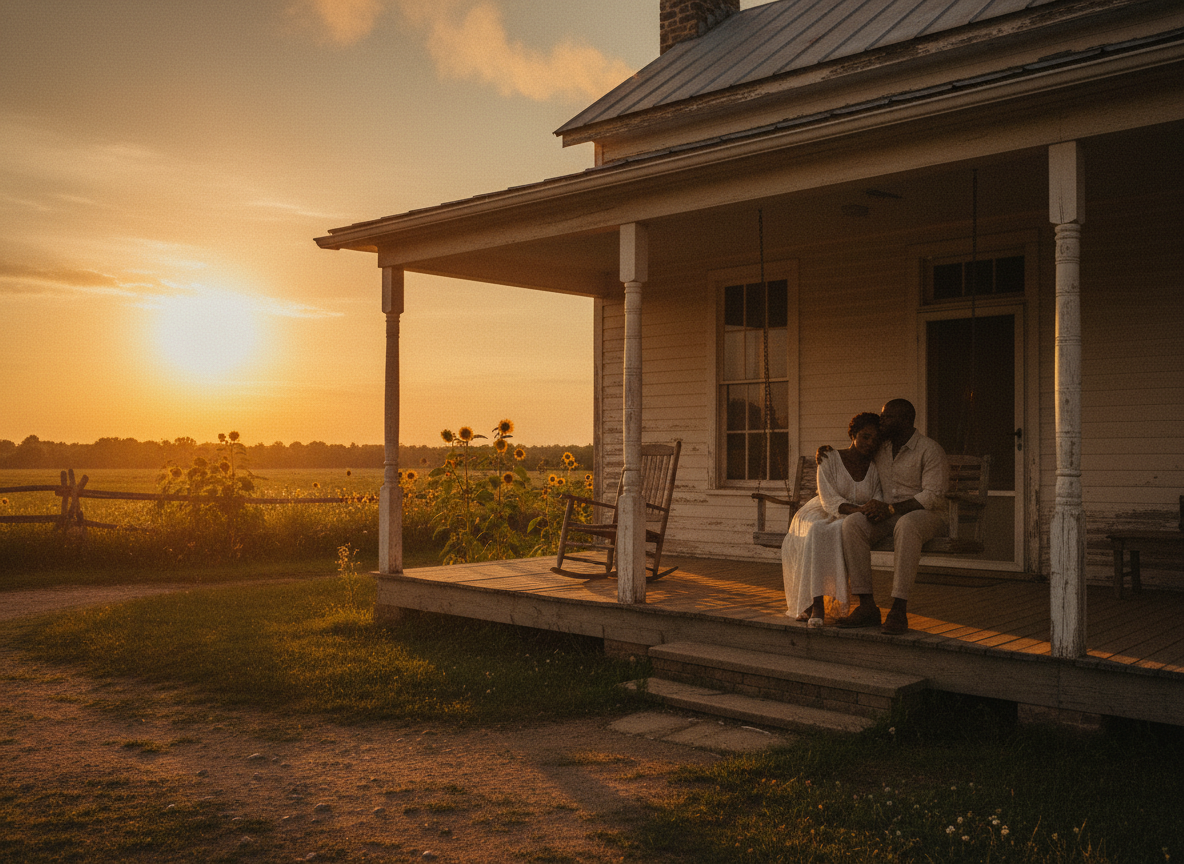
The road to the farmhouse was more absence than road, two pale scars of wheel track fading into tall grass. Elias drove the mule cart as if guiding a fragile dream, hands loose on the reins, eyes fixed on the half-standing house ahead. The roofline sagged like an old man’s back. One side of the porch had caved inward, and the chimney leaned away from the sky at a doubtful angle. It looked, Ida thought as she climbed down, like a structure that had tried to outlive itself and almost succeeded.
“It’s uglier than I remembered,” Elias said, setting his hat on the porch rail that still stood solid. “But it’s ours.”
Ida stepped onto the porch and felt the boards answer beneath her feet with a low, startled groan. She smiled anyway, letting her hand travel along the splintered post as gently as if she were smoothing the cowlick of a child. The air smelled of dust and last year’s rain, of mice and old smoke, and beneath it all the green, wet breath of the fields just beyond the ruined fence.
“It’s not ugly,” she said. “It’s only half-awake.”
Elias laughed softly, that low river sound she had followed from the little station into this nowhere country. They had almost nothing: a mattress rolled in ticking, a crate of dishes wrapped in newspaper, a Bible, two good knives, and a tin of Ida’s seeds. But they had each other and a deed with Elias’s name on it, and the worn, hopeful conviction of young people who believe that time is something you can wrestle into shape with bare hands.
Across the field, on the rise where the neighbor’s land began, Amos stood with his palms resting on the top rail of his fence. He watched the pair move through the house in the falling light, two slim figures in a broken box. To his eyes they were too fine-boned for this place, more suited to books and lamplight than plows and storms. He watched anyway, as one does when the world delivers a new story to the edge of one’s own.
That first night the wind threaded itself through every missing board and blistered shingle, singing an ancient, restless song. Ida lay awake on the mattress on the floor, counting the gaps where stars shone through the roof. Beside her, Elias’s breath came slow and even. She could feel the heat of him, that steady living proof in the dark.
“You still think we can do it?” she whispered.
He turned toward her, eyes opening, a sleep-rough smile touching his mouth. “We’re already doing it.”
In the months that followed, they built a life from what looked, to anyone passing on the distant road, like almost nothing. They mended the roof with scavenged tin. Elias straightened the sagging porch with a length of oak, his shoulders straining, Ida bracing the beam with both her hands and all her will. They planted rows of corn and beans, Ida’s careful fingers pressing each seed into the dirt with a brief, silent blessing. The kitchen that had once been a place for other people’s sorrows became the stage for their small, daily miracles: bread that rose, coffee that was somehow always enough for one more cup, the easy choreography of two people learning each other’s movements as if by second sight.
On Sundays, Amos sometimes rode his old mare down the hill with a basket from his own table—eggs, a jar of preserves, a wedge of cheese wrapped in muslin. He stayed long enough for coffee, his weathered hands curling around the cup as he listened to Ida’s laugh fall through the room like sunlight. He watched the way Elias looked at her, as if every nailed board and turned furrow were only prelude to the miracle of her presence.
By winter the house was still crooked, still patched in places with the wrong kind of wood, still whistling at the seams when the north wind came down hard. But there were curtains now, and Ida’s dresses hanging on pegs in the bedroom, and Elias’s boots by the door. Smoke wrote itself in a steady hand from the straightened chimney. The farm, like the house, bore their touch in every small repair.
On a soft, rain-washed morning, Ida pressed Elias’s palm against the slight swell below her ribs.
“Feel,” she said.
At first there was nothing. Then a flutter, as if some shy thing had brushed past from the inside. Elias’s eyes shone wide and startled, boyish with wonder.
“That’s our boy,” he whispered. “That’s our Solomon.”
Amos, watching from the rise that evening, saw the way Elias lifted Ida down from the wagon as if she were made of spun glass and promise, and he understood something simple and permanent: that the broken house below was no longer just wood and stone. It was a vessel for a love stubborn enough to take root in ruins.
Part Two — Solomon and Celestine
Solomon grew up with the smell of turned earth in his lungs and the restless song of the insects in his ears. The house he knew bore the marks of his parents’ long labor: the straightened porch, the patched roof, the orchard of young trees that Ida spoke to under her breath. He learned to measure seasons not by calendars but by the feel of the ground under his bare feet, by the tilt of light in the kitchen window at supper.
On the neighboring farm, another set of seasons shaped a girl named Celestine. Solomon first saw her not in some storybook frame of sun and wildflowers, but through the heat shimmer of a late summer afternoon, her small hands working the latch on her family’s gate while her father fixed the harness on their horse. She glanced up and caught him watching. Something unaccountable bloomed between them—not lightning, not thunder, but a slow, patient weather.
The defining moment came in an ordinary morning. Solomon had been sent to return a borrowed plowshare. He waited on the front steps of Celestine’s house, hat in his hands, dust on his boots. Inside, he could hear low voices, the clink of a cup on a saucer, the hollow thud of a drawer sliding shut. Then the door opened and Celestine’s father stepped out with her at his side.
She was wearing a pale dress already damp with the heat, her hair parted into two dark braids. Her father held a thin blue scarf in his work-rough hands. He lifted it like a sacrament and looped it gently around his daughter’s neck, his fingers moving with surprising delicacy for a man who spent his days lifting stone and wood. He tied the ends in a loose knot just below her throat, then placed his palm there, light as a blessing.
Solomon watched the small gesture—the care, the wordless plea for her to be safe in a world that was not. The tenderness of it cleaved him open. His eyes stung; his throat closed. This, he thought, is what love looks like when no one expects to be seen.
Celestine, catching his gaze over her father’s shoulder, smiled in that sideways, apologetic way of someone unaccustomed to being the center of anything. Solomon blinked, swallowing down the ache. In that moment he knew, with the simple certainty of a boy who has never yet lost anything irreplaceable, that he loved her completely.
Their childhood together unfolded in a scatter of vivid fragments: the slap of bare feet on the dock in high summer, the hiss of a match lighting a lantern in the barn, the droning halo of bees around the wildflower stand by the creek. Once, on a day so hot the air felt thick enough to drink, they walked to the lake with a basket of bread and fruit between them. The sky was an unbroken blue plate; the cicadas had thinned their song to a lazy, intermittent rasp.
They ate in companionable silence, legs dangling off the dock. A dragonfly stitched invisible seams in the air. Celestine leaned back on her palms, her borrowed scarf—a different one now, butter yellow—slipping to reveal the tender line of her throat.
“Bet you won’t jump in,” she teased.
Solomon slid her a look. “Bet you’re wrong.”
He stood, shrugging off his shirt. The boards were hot under his feet. Then something wild and boyish seized him—a desire to make her squeal, to crack open her composure and see what joy lived underneath. Before she could brace herself, he grabbed her hand and tugged her up with him.
“Solomon, no—”
He pulled her close and, with a shout that flew up to startle the crows from the trees, pushed them both off the end of the dock. For a second there was only air and her gasp in his ear, then the sharp, all-consuming embrace of the lake. The water took him, wrapped him cold and complete. Beside him, Celestine surfaced with a shriek that dissolved into laughter, her hair plastered to her face.
“You fool,” she sputtered, wiping water from her eyes. “My shoes.”
“Your shoes needed baptizing,” he said. “So did you.”
Above them, bees murmured in the wildflowers, unconcerned with human foolishness. The sun made a net of light on the surface, and for a time the world contracted to the sound of their breath and the steady slap of water against the dock pilings. It was, Solomon would later think, one of those small perfect things that life gives you without explanation or warning—a day you don’t know to treasure until it has already passed into story.
They grew; the farm work grew with them. Hands roughened, backs learned the language of labor. The play between them changed shape but not substance. Glances lengthened. Silences acquired gravity. Amos watched from a distance, seeing in Solomon and Celestine a reflection of Elias and Ida in the early years: the same stubborn hope, the same careful plotting of a shared future across uncertain soil.
In time, they married. The ceremony was simple: a preacher from town, a circle of family and neighbors, Ida’s hands shaking only once as she fixed a sprig of rosemary to her son’s lapel. Celestine wore no veil, only a plain dress and at her throat, tied with familiar care by her father’s fingers, a white scarf that fluttered like a small flag in the wind. When Solomon looked at her that day, he saw all the summers and winters that had brought them here braided together tightly, unbreakable.
They wanted children. The wanting lived between them with a soft yet insistent weight, present in the way Celestine turned her head whenever she heard a baby’s cry in church, in the way Solomon’s hand lingered on the empty cradle they kept in the corner of their bedroom. Months passed, then years. The cradle gathered dust they both pretended not to see.
Celestine, whose life had been shaped by tending and making-do, grew taught in the places that had once been loose with laughter. She planted more flowers, as if the earth could be coaxed into giving her some other kind of beauty in exchange for the one it withheld. On certain nights Solomon found her sitting on the edge of the porch, scarf wrapped tight around her shoulders even in summer, eyes turned toward the dark shape of the fields.
“Maybe it’s not meant,” she would say, the words carefully without bitterness.
“Maybe it’s not yet,” he would answer, because his faith in time remained stubborn even as evidence piled quietly against it.
When she fell ill, it came without the courtesy of explanation. A cough that didn’t leave. A tiredness that clung like damp cloth. Doctors from town spoke in circles that never quite closed. Remedies were tried and failed. The bees still moved from flower to flower. The seasons kept their appointments.
On the last evening, the house was very quiet. Ida sat in the kitchen, hands wrapped around a cup of cooling tea, listening to the small sounds from the bedroom where Solomon kept vigil. Outside, the wind moved through the orchard trees, stirring leaves that had not yet decided whether to fall.
Celestine’s hand, already light in his, grew lighter. Her gaze drifted toward the ceiling, as if following some invisible line.
“We didn’t—” she began, but the sentence broke apart.
Solomon bent close. “We did,” he whispered. “We loved. That was the first thing. Maybe it’s the only thing.”
Her eyes found his again. A small, familiar smile touched her mouth, the one he had first seen across a dust yard on a morning when her father tied a scarf around her neck. Then she exhaled, a long, soft letting-go, and whatever had animated her left without fanfare, like a guest slipping quietly from a crowded room.
The cradle in the corner remained empty. The loss settled into the house, into the lines of Solomon’s face, into the very grain of the table where her hands had once moved with easy purpose. The bees went on, stitching the world together with their invisible work, unconcerned with human grief.
Part Three — Naomi
After Celestine’s death, the farm became a kind of echo chamber. Every object seemed to throw his memory of her back at him: the chipped blue bowl on the shelf, the shawl folded in the chair by the door, the scarf still hanging from its nail in the bedroom, trailing the faintest ghost of her scent. Solomon moved through his days like a man walking underwater, every action slowed, every sound muffled.
Work saved him from breaking apart completely. Fields did not care for grief. Soil did not pause its slow, constant hunger out of respect for human sorrow. There were seeds to plant or lose, fences to mend or abandon. So he rose before dawn, his body remembering what his heart no longer cared about, and he worked. At night he sat at the kitchen table, staring at the space where Celestine would have been, the silence across from him loud as any storm.
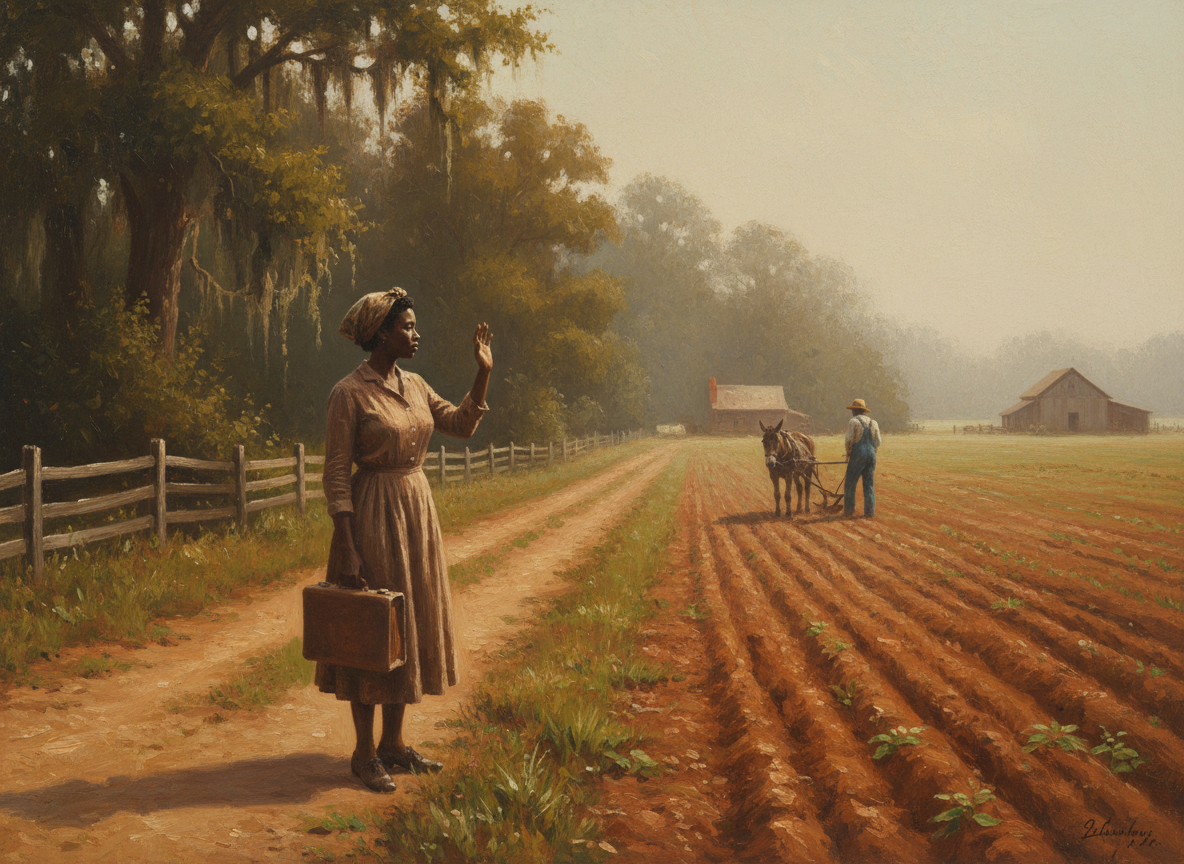
Naomi arrived on a day that wore a thin coat of rain. The mule, skittish at the shifting shadows, had pulled her wagon sideways near the end of the lane. Solomon watched from the porch as she jumped down and coaxed the animal back into the ruts, her voice low and firm. She was not young, not old, the kind of woman weather marks without entirely claiming. Her dress was travel-dusted; her boots had seen more than one road.
She lifted her hand in a tentative wave when she saw him watching.
“Sir,” she called. “I’m sorry to trouble. I’m looking for work and maybe a place to lay my head a while.”
Her voice carried a history he could not yet read. Solomon felt an old habit stir in him—the impulse to offer, to shelter, to provide. Beside that, like a shadow, came guilt, as if every kindness to another woman might be a betrayal of the one who was gone.
“I could use hands,” he answered finally. “The house has a spare room. It belonged to my—” The word caught. He let it go. “It’s yours if you want it. Name’s Solomon.”
“Naomi.”
She moved with the efficient economy of someone long accustomed to adapting. By nightfall she had swept the spare room, shaken out the curtains, and made a dent in the mountain of washing that had been quietly growing in the corner. At the table she ate with measured gratitude, complimented Ida’s preserves, asked questions about the land that showed she knew something about fields and their moods.
That first night Solomon lay awake listening to the unfamiliar rhythm of another person’s movements down the hall. He thought he heard her crying once, or maybe it was only the house remembering Celestine. Sleep came thin and fitful.
In the morning, he rose before dawn and did something he had not done since before Celestine grew ill: he made breakfast as if the act itself were a prayer. Pancakes, the batter beaten just until smooth. Eggs scrambled slow over low flame. Grits salted and dabbed with butter. Ham fried until the edges crisped. Tea leaves steeped in the chipped blue pot, honey set out beside it.
Naomi entered the kitchen tying her hair back, eyes still soft with sleep. She stopped short at the sight of the table.
“You cooked,” she said, as if he’d conjured the spread from thin air.
“Seems I remember how.”
She sat, reaching for the cup he’d set out. He watched as she poured tea, then, without hesitation, reached for the honey rather than the sugar. She drizzled it in, the amber thread catching the light, then stirred twice clockwise—exactly as Celestine had always done.
“How did you know?” Naomi asked after her first sip, eyes widening a fraction. “Most people put sugar in their tea. My mama did. But I’ve always taken honey.”
Solomon felt the ground shift under the table.
“I—I didn’t,” he stammered. “I just—that’s how I’ve always served it.”
He did not say: that’s how Celestine liked it, and I have not changed the way I set this table since.
As days turned into weeks, they found a rhythm. Naomi took to the work as if the farm had been waiting for her. She moved through the house, quietly mending the small hurts of neglect—a loose hinge here, a threadbare curtain replaced there, the cracked dish glued back into usefulness. In the fields she walked the rows with Solomon, her gaze level, her questions precise. They spoke first of weather, then of past places, then of selves.
The more they talked, the more unsettling parallels emerged. Naomi laughed at the same jokes that would have bent Celestine double. She frowned in the same narrow, thoughtful way at the mention of waste, of throwing anything useful away. Once, standing at the edge of the lake, she shivered and said, “I never cared for deep water. All that darkness under you.” It was a phrase Celestine had used, nearly word for word, on a long-ago afternoon after he’d pushed her in.
Solomon told himself it was coincidence. People carried the same fears, the same small preferences, across miles and generations. But some nights, when he caught Naomi’s silhouette in the doorway, the way her hand rested on the jamb, the way she tilted her head—for a moment his heart would lurch in his chest as if someone he thought forever gone had just returned.
They became, without quite intending it, a team. Tasks divided themselves naturally: she took the ledgers; he took the plow. She sorted seed; he repaired harness. The house, which had been filled with only echoes of absence, began again to sound like something lived-in: the scrape of a chair, the low hum of a tune carried from room to room, the clink of dishes that would soon be washed and dried by two pairs of hands.
Some evenings they sat on the porch, watching the sky change color above the darkening fields. Naomi would pull her shawl tight and talk about the places she’d known before this: a small town where the river flooded every spring, a boarding house that smelled of boiled cabbage and coal. Solomon listened, feeling the distance between what was and what had been narrow, then widen, then narrow again as she spoke.
It never occurred to him, then, that love might be circling back in a form he could neither recognize nor refuse.
Part Four — Celestine Returns
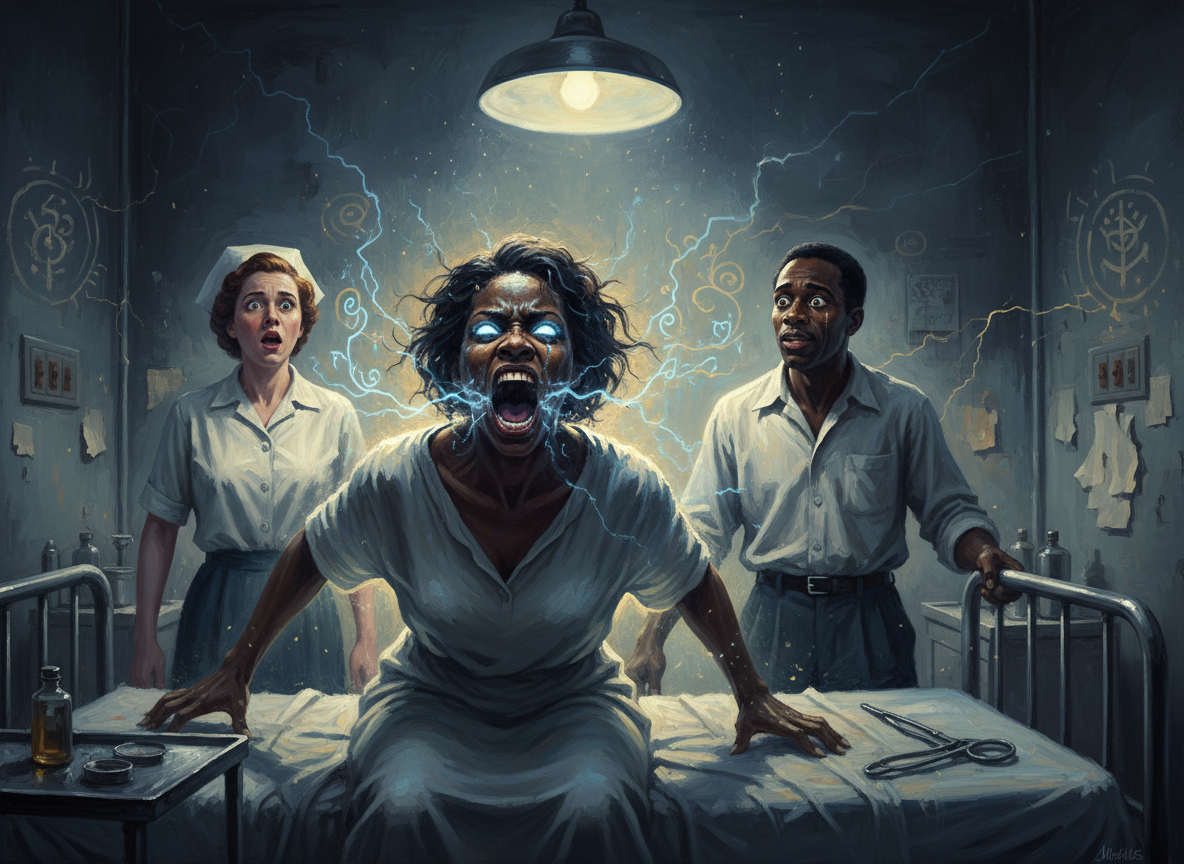
The night Celestine returned, the air was strange—too still for summer, as if the world were holding its breath. Solomon woke to the sound of his name spoken in a voice that did not belong to the present.
Solomon.
He sat up in the dark, heart suddenly bright in his chest. The house around him was a familiar arrangement of shadows: the window with its crooked frame, the wardrobe, the chair with Celestine’s scarf still hanging from the back. The voice came again, clearer, threaded with urgency.
Solomon. Come.
He rose without lighting the lamp, moving by memory. The hallway was a narrow throat of darkness. Naomi’s door stood half-closed, a faint glow leaking around the jamb from the lamp within. He paused, hand hovering over the knob, the old lessons of propriety and distance tugging against the pull of the voice.
Please.
It was Celestine’s please. The exact tilt of sound, the same shape it had taken on the night she’d asked him to sit beside her while the fever burned through her. His fingers closed on the knob. He opened the door.
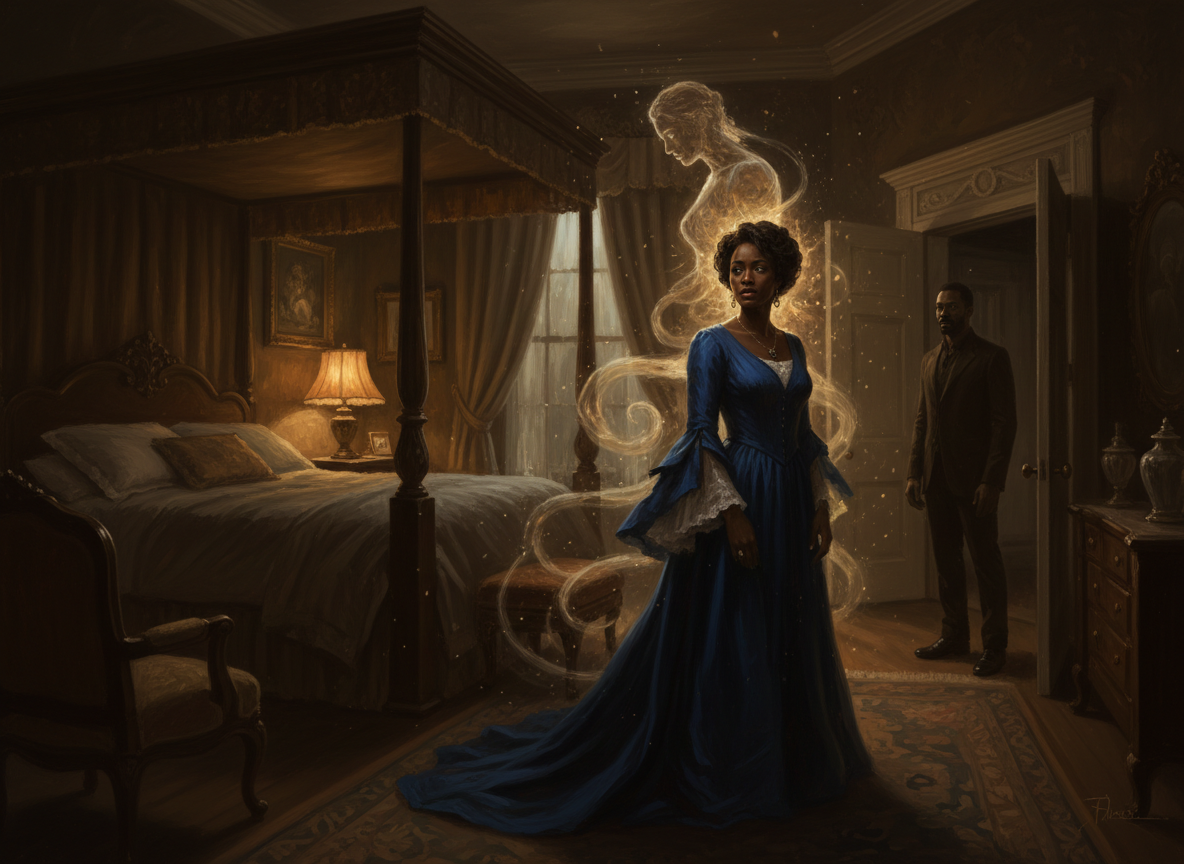
Naomi was standing by the bed, the lamplight painting her in a soft, uncertain glow. She wore a nightgown Solomon had not seen in years—white cotton, lace at the collar, the hem brushing her ankles. It had belonged to Celestine; he remembered the day they’d bought it on a rare trip to town. He had folded it away after her death, unable to look at it without feeling flayed. He did not know how it had found its way to Naomi’s body.
She turned at the sound of the door. Her face was Naomi’s, and yet not. Something in the set of her mouth, the angle of her chin, the light in her eyes had changed. It was like looking at a photograph double-exposed: one woman superimposed upon another.
“You came,” she said, and in that moment the room contracted to a single impossible truth.
“Geni,” he whispered, using the private nickname only he and Celestine had shared.
Her smile was answer enough. Naomi’s hands lifted, but the gesture was Celestine’s, that familiar way of reaching for him as if he were both anchor and shore.
“I couldn’t stay away,” she said. “Not from you. Not from this house. It’s soaked through with us.”
He stepped forward as if drawn. Grief, long hardened into a kind of scar, split open. Every rational part of his mind cried out that this was impossible, that he was dreaming, that his loneliness had at last tipped over into madness. But her hand, when it touched his cheek, was warm. Her breath carried the faint tang of the tea they’d had hours before. He could feel the well-known tremor in her fingers.
“How are you here?” His voice broke around the question.
“Through her,” Celestine said, glancing down at herself—at Naomi’s borrowed form. There was something like apology in her eyes, and something like fierce joy. “She opened a door without knowing. I walked through.”
What happened between them then was not clean or simple. Desire and mourning are close cousins. They lay down together in the dim light, two bodies and three selves tangled in a shape the world had no name for. Solomon moved as if he were both drowning and being pulled to shore. He called her Celestine, then Naomi, then Geni, the names spilling over each other in a litany of need and bewilderment.
Afterward, he woke in the gray seam of dawn with Naomi’s head on his chest, her hand splayed over his ribs. Her face, in sleep, was only her face: soft, slack, uninhabited. For a moment he wondered if the whole night had been some elaborate mercy of the subconscious. Then she stirred, brow furrowing, and said in a rasp that was unmistakably Celestine’s, “You snore worse than the mule,” before sinking back down into a deeper sleep.
In the days that followed, Celestine began moving in and out of Naomi’s body with a rhythm Solomon could neither predict nor control. At breakfast, Naomi would be buttering bread, her movements precise, when suddenly she’d look up with Celestine’s mischief in her eyes and say, “Remember the time you pushed me into the lake?” as if it had happened only yesterday. Then, just as quickly, she’d blink, confusion washing across her face, and ask, “Why are you staring at me like that?”
He lived between those tides, always watching for the shift—the small change in posture, the tilt of the head, the sudden weight of an old tone in a new mouth. When Celestine surfaced, they spoke in the shorthand of people who had once believed they had all the time in the world. When Naomi returned, he swallowed the words that had been on his tongue and tried to remember how to be only a landlord, an employer, perhaps the seed of some other kind of companionship.
One evening, as the sun bled out behind the fields, Celestine looked at him across the table from Naomi’s chair and said, “You’re kissing her but thinking of me.”
He did not deny it. How could he? Every time his lips met Naomi’s, the line between present and past blurred, each woman’s scent and shape bleeding into the other. The house, once again, held more than it could comfortably contain.
Part Five — The Pregnancy
When Naomi missed her first bleeding, she mentioned it casually, almost as an afterthought, while they were weeding the beans.
“Might be nothing,” she said, fingers busy in the dirt. “But I’m late.”
The words hit Solomon like a blow he hadn’t braced for. The sky overhead did not change. The rows of green remained rows of green. But something fundamental tipped inside him, the axis of his world shifting a fraction of a degree.
Later, when the missed days piled into weeks and then months, when there was no denying the new roundness of Naomi’s belly, Solomon stood in the doorway of the bedroom and watched her in the looking glass, her hand resting there with a wonder that was almost reverent.
“You’re quiet,” she said to his reflection.
He attempted a smile, the kind that showed enough teeth to be mistaken for joy. “Just thinking,” he said. “There’ll be things to build. A cradle. Shelves.”
Inside, two truths warred in him. One: that a life was forming, a life he had once believed permanently denied him. Two: that this life had come not solely from his union with Naomi, but from that impossible mingling of presence and absence—from those nights when Celestine had taken Naomi’s body as her own and come to him with the hunger of a love interrupted.
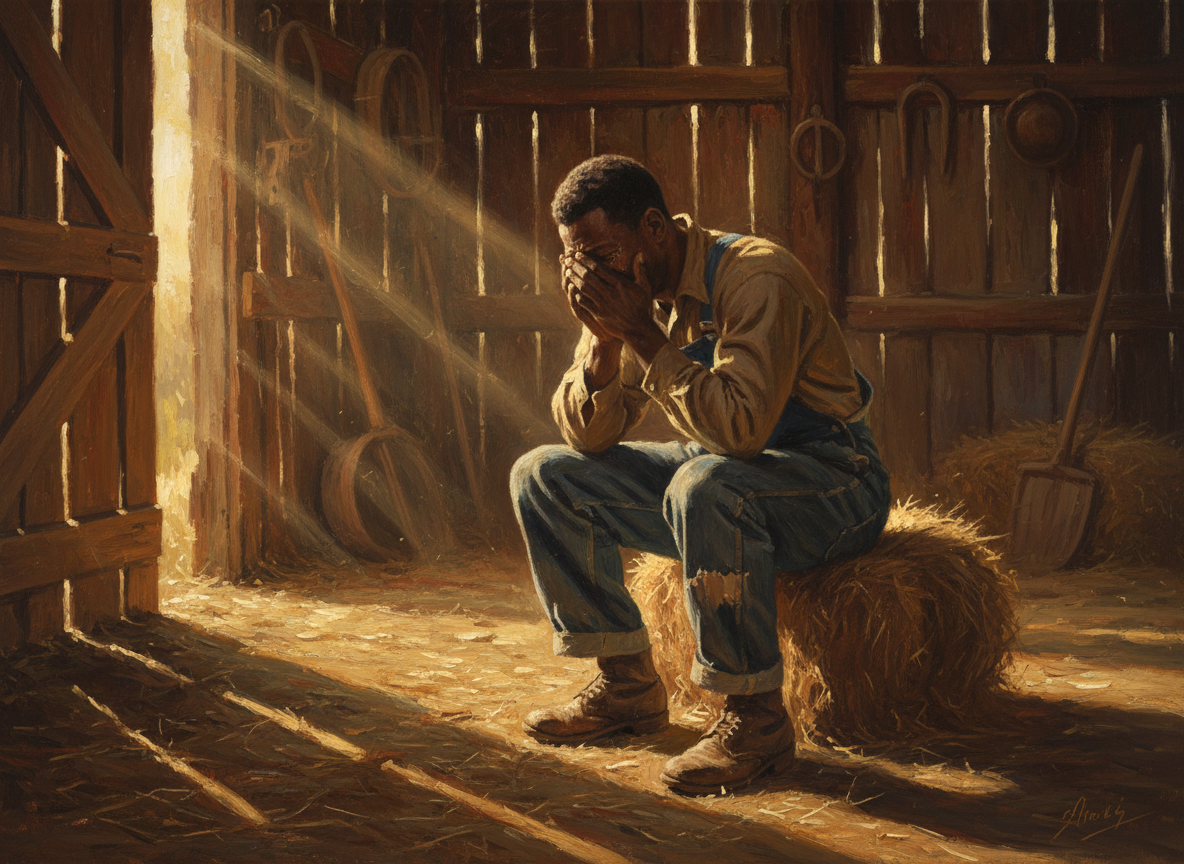
Alone in the barn, he let himself smile the unguarded smile he could not show in the house. He ran his hands along the smooth boards he would plane for the crib. We did it, he thought, and in his mind he was speaking to Celestine. After all this time.
But happiness, in this place, was never uncomplicated. One afternoon, as the light slanted honey-thick through the kitchen, Naomi was washing dishes when her hand stilled in the water, fingers gone slack. Her shoulders tensed; her head bowed slightly, as if listening to some distant signal. When she lifted her face again, her eyes were wet and blazing in a way Naomi’s had never been.
“How could you do this to me?” Celestine’s voice burst from her, ragged with hurt. “You know I always wanted a child and now you’re going to give her a child. How could you?”
Solomon, who had come in quietly and stood by the doorway, froze. The dish slipped from Naomi’s hand back into the basin with a splash. Water mottled the front of her dress. She did not seem to notice.
“My dearest,” he managed, the words scraping his throat. “We enjoyed so many times together—I always thought it was you I was making love to.”
“But it’s not me,” Celestine cried, pressing both hands to her borrowed belly. “It was her. And now she will have the family I always wanted and I will be left in the shadows, watching. I will be sad. Do you understand that? I will be so sad.”
Something in him broke. He crossed the room in three strides and fell to his knees before her, arms circling her waist as if he could somehow hold both women, both truths, at once.
“I don’t know how to make it right,” he choked. “Tell me how. I would give you the whole world if I could. I thought—I thought this was you finding a way back to what we were meant to have.”
Her fingers threaded through his hair, a touch both fierce and trembling. For a moment he felt the old, anchoring warmth of her love, then it shifted—the grasp loosening, the air around them thinning.
Naomi blinked down at him. Her hands, now only her hands, hovered uncertainly above his bowed head.
“Solomon?” she whispered. “What’s wrong? Why are you crying?”
He could not answer in any way that would make sense. Words like possession, jealousy from beyond the grave, shared flesh, belonged to a language she had never been taught. Instead he laid his forehead against her lap and wept, the fabric of her dress soaking with his tears. Naomi, bewildered but tender, placed her hands on his shoulders and held him as if he were the one in need of shelter.
He cried until exhausted sleep took him there on the kitchen floor. When he woke, his cheek creased with the pattern of her skirt, Naomi was humming under her breath, one hand in his hair, the other resting protectively over the child neither of them yet fully understood.
Part Six — The Ultrasound
Time, obstinate as ever, carried them forward. The town hospital had acquired a new machine in recent years, a smooth, humming thing the doctor spoke of with both pride and superstition. “Lets us see right inside,” he told Naomi on their first visit, as if discussing a miracle or a violation.
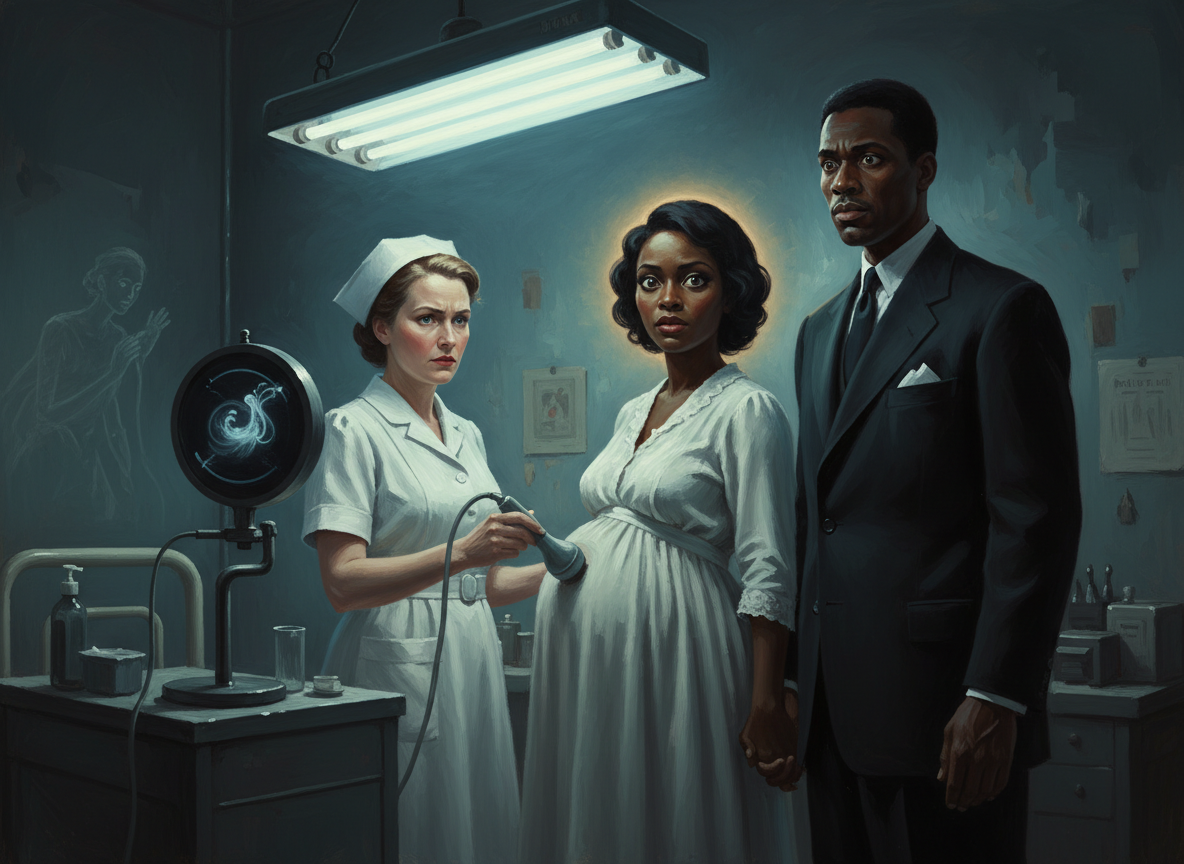
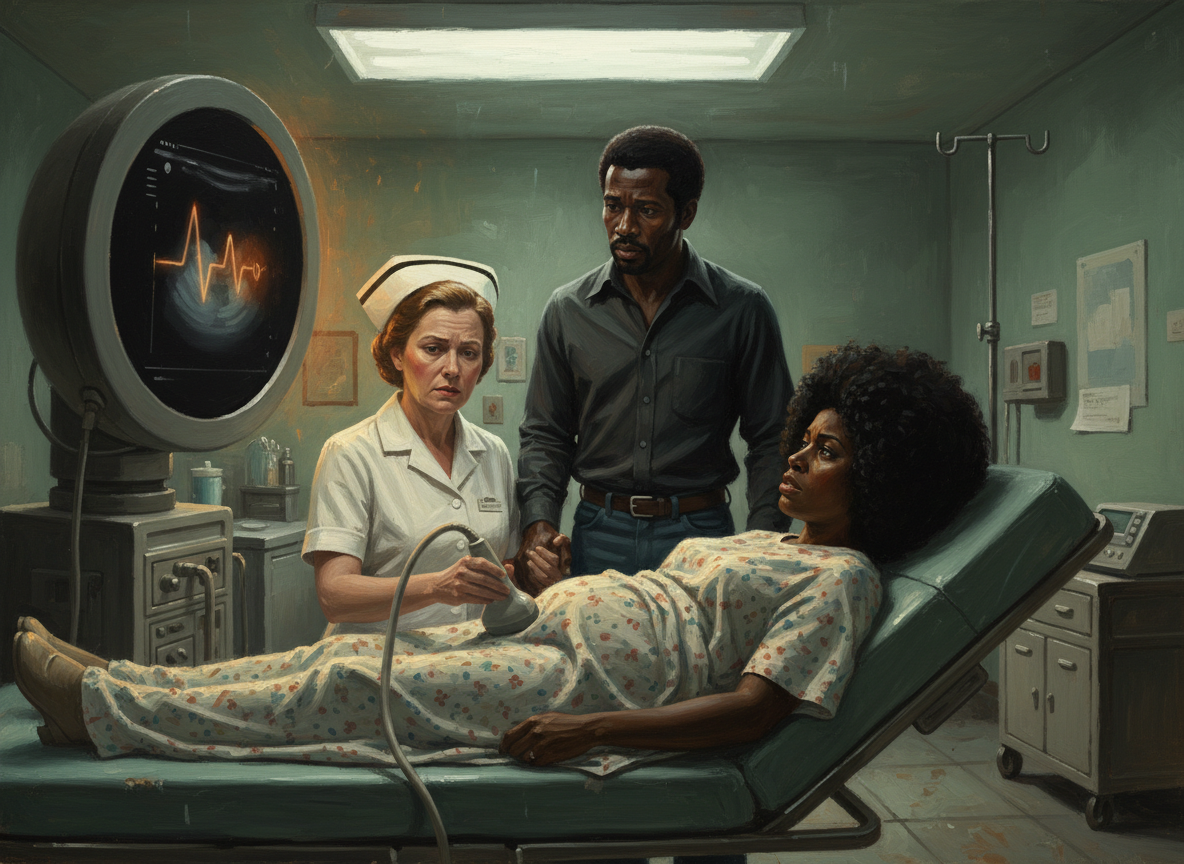
On the day of the ultrasound, fluorescent light flattened all colors into shades of gray. The room smelled faintly of antiseptic and old coffee. Naomi lay on the narrow bed, her dress hitched up, the swell of her belly bared to the cool air. A nurse with brisk hands squeezed gel onto the wand and pressed it gently against Naomi’s skin.
The machine crackled to life, scribbling grainy constellations across the monitor. Solomon sat in a metal chair by the bed, his fingers clenched white around the armrests. He felt more farmer than father—as if he were examining some new seed germinating inside soil he did not own.
“There we go,” the nurse murmured, eyes narrowing as she traced shapes only she seemed to understand. “It seems we have a heartbeat. I can see his head right there—it’s a boy.”
A boy. The word landed like a stone in a still pond, sending rings of astonishment through Solomon’s chest. A son, flesh and breath and future. Naomi turned her head toward him, her smile shy and immense.
Then the nurse’s forehead creased. “That’s odd,” she said softly.
Solomon’s pulse tripped. “What’s odd?”
The nurse adjusted the wand, pressing a little harder. The monitor flickered; the soft whoosh-whoosh of the baby’s heart filled the room. Then, beneath it, for a brief, impossible moment, another rhythm emerged—a second heartbeat, lighter, slightly out of sync, like a harmony to the first’s melody.
“Now there are two heartbeats when there was one at first,” the nurse said, half to herself. Her eyes darted to Naomi’s belly, then to the monitor, as if the skin might thin and reveal its secret.
The air changed. Naomi’s hand tightened on the sheet. When she spoke, it was not Naomi’s fear in the words but Celestine’s fierce, trembling joy.
“See, Solomon,” she said, her voice unfamiliar in this sterile room yet utterly at home in his bones. “We did it. We have our love child. Even in death our love will transcend time. And Naomi was only a vessel.”
The nurse, intent on the screen, either did not hear the difference or filed it away as anxiety. Solomon heard nothing else. The second heartbeat fluttered and then faded, like a bird taking sudden flight out of sight. The sound in the room returned to a single, steady thrum.
A sharp, almost electrical silence followed. The nurse blinked, leaning closer to the monitor.
“That’s weird,” she murmured.
“What’s weird?” Solomon asked, his voice thinner than he intended.
“There was…for a moment I thought I saw two readings. Two hearts. But now there’s only one again.” She straightened, professionalism snapping back into place like a coat. “I should go get the doctor, have him take a look.”
Naomi turned her head toward Solomon, eyes wide, searching his face for a verdict on reality. He saw the question there: Am I broken? Is our child in danger?
Solomon stood, his decision rising from somewhere beneath fear, beneath reason—from that deep, stubborn place where his love for both women braided together.
“Don’t worry about a doctor,” he said, his voice steadier than he felt. “We understand everything.” He nodded toward the monitor, where the lone heartbeat marched on. “The heartbeat is strong and healthy. That’s what matters.”
The nurse hesitated, then shrugged, the small mystery not quite heavy enough to outweigh a full waiting room. “If you’re sure,” she said. “Everything looks fine for now. We can always check again next month.”
As they left the hospital, Naomi’s thoughts turned not to specters or second heartbeats but to future arrangements: how the crib would look by the bedroom window, whether they might one day stand in the little church as man and wife. She had noticed the extra set of boy clothes Solomon had quietly bought and tucked into the paper sack, but she tucked the oddness away in the same place she put her questions about his middle-of-the-night tears and the way he sometimes looked at her as if she were two people at once.
She was, she realized with a kind of terrifying gladness, head over heels in love with Solomon and all his possibilities as a husband. Whatever shadows walked beside them, she believed, could be outloved in time.
Part Seven — The Birth
Labor announced itself in the old way: a warm rush of water, a sudden tightening that bent Naomi double over the kitchen table. The world, obliging, narrowed its concerns to breath and pain and time.
Solomon found her gripping the back of a chair, dress dark at the hem, hair plastered to her temples.
“It’s time,” she said through clenched teeth.
He moved without thinking, old instincts taking the lead. The overnight bag by the door. The blanket for the wagon seat. The rushed, half-formed prayer that this, at least, might be simple. But as he helped her into the truck they now used instead of the old mule cart, he saw something shift behind her eyes. Her breath hitched not with pain, but with recognition.
“Solomon,” she said, and the name in her mouth was Celestine’s again.
He drove faster, the road a blur of ruts and shadows. At the hospital, nurses in soft-soled shoes ushered them into a delivery room that smelled of bleach and apprehension. Naomi writhed on the narrow bed, the contractions climbing in intensity, each one a wave intent on breaking her apart.
A young doctor with tired eyes and ink stains on his cuff took Naomi’s hand, his voice low and practiced. “You’re doing fine, Mrs.—?”
“Her name is Naomi,” Solomon supplied automatically.
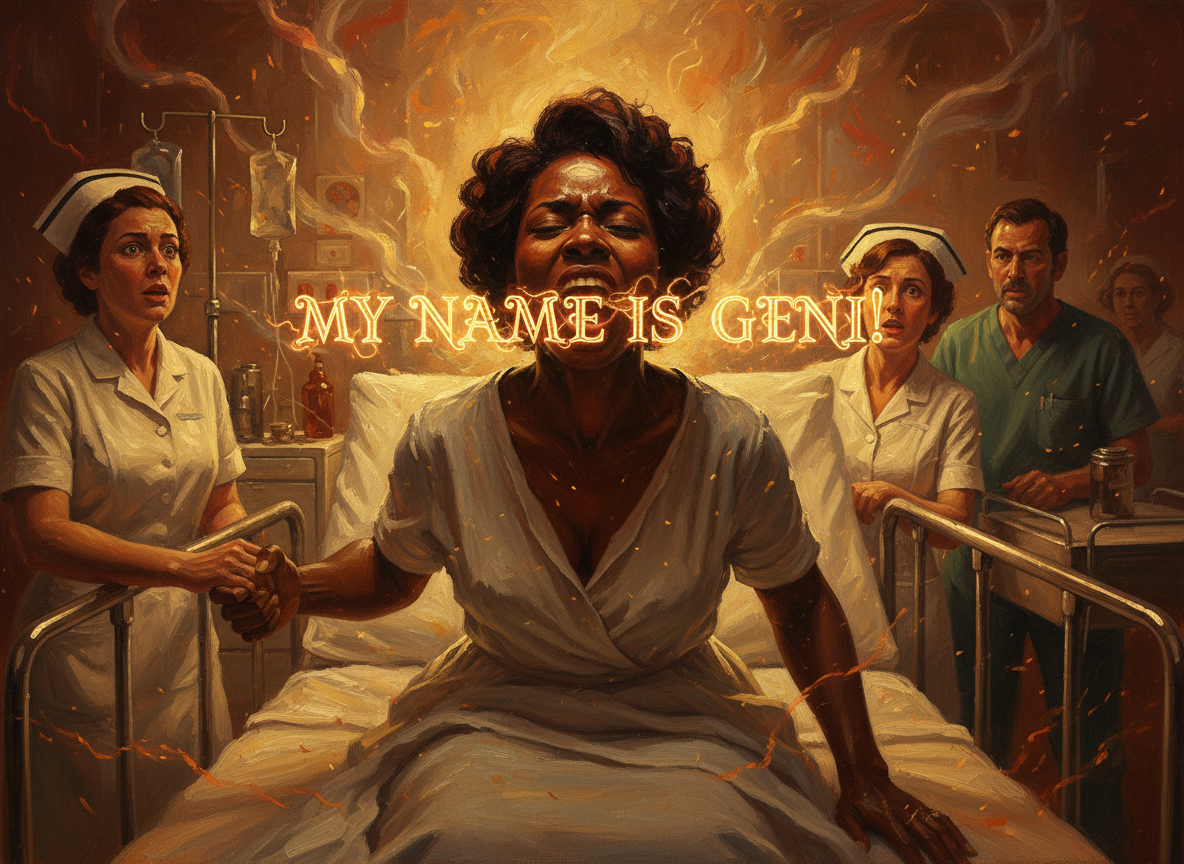
Naomi arched, a guttural sound tearing from her throat. When she came back to herself, the room had sharpened, every line etched in painful clarity.
“My name is Geni!” she shouted, the words flung like a gauntlet into the clinical air.
Silence fell, sudden and complete. The nurse by the foot of the bed glanced at the doctor; the doctor glanced at Solomon. There was a beat in which all three seemed to understand that this moment stood at some ragged edge between explanation and acceptance.
The doctor, to his credit, chose the kinder path. “All right, Geni,” he said gently. “I’m Dr. Harlan. We’re going to help you bring this baby into the world. On the next contraction, I need you to push, all right?”
Celestine, wearing Naomi’s sweat and trembling limbs, bore down with a fury that was more than physical. Between pushes she cursed and prayed, sometimes in the same breath. “You hear me, boy?” she gasped at one point, hand clawing for Solomon’s. “You come out whole. You come out knowing you are loved twice over.”
Then, in the space between one contraction and the next, the expression on her face changed. The hard edge of Celestine’s will softened into Naomi’s bewildered pain.
“Where—?” Naomi began, but the question drowned beneath the next wave. She pushed, guided now by the doctor’s measured encouragement and Solomon’s murmurings, which braided present assurances with names from another life.
The room contracted to a single point: the crowned head emerging, the slick turn of tiny shoulders, the sudden absence of weight inside Naomi’s body. A cry split the air, high and indignant, startling even the unflappable nurse.
“A boy,” the doctor announced, as if the universe had just confirmed a rumor. He laid the small, vernix-slicked body on Naomi’s chest. “Strong lungs on this one.”
Solomon watched, dazed, as his son took his first rasping breaths. Solomon Jr. The name rose in him unbidden, tasting of continuity and hope. Naomi wept, laughter and tears mixing as she stroked the child’s tiny back, counting fingers and toes as if inventory could ward off eventual loss.
Amid the bustle—the clatter of instruments, the rustle of sheets, the nurse’s soft instructions—Solomon felt another absence, quieter but no less real: Celestine. Her presence, which had thrummed at the edges of the room throughout the labor, seemed to have drawn back. For the first time in months he could not sense her in Naomi’s eyes or movements.
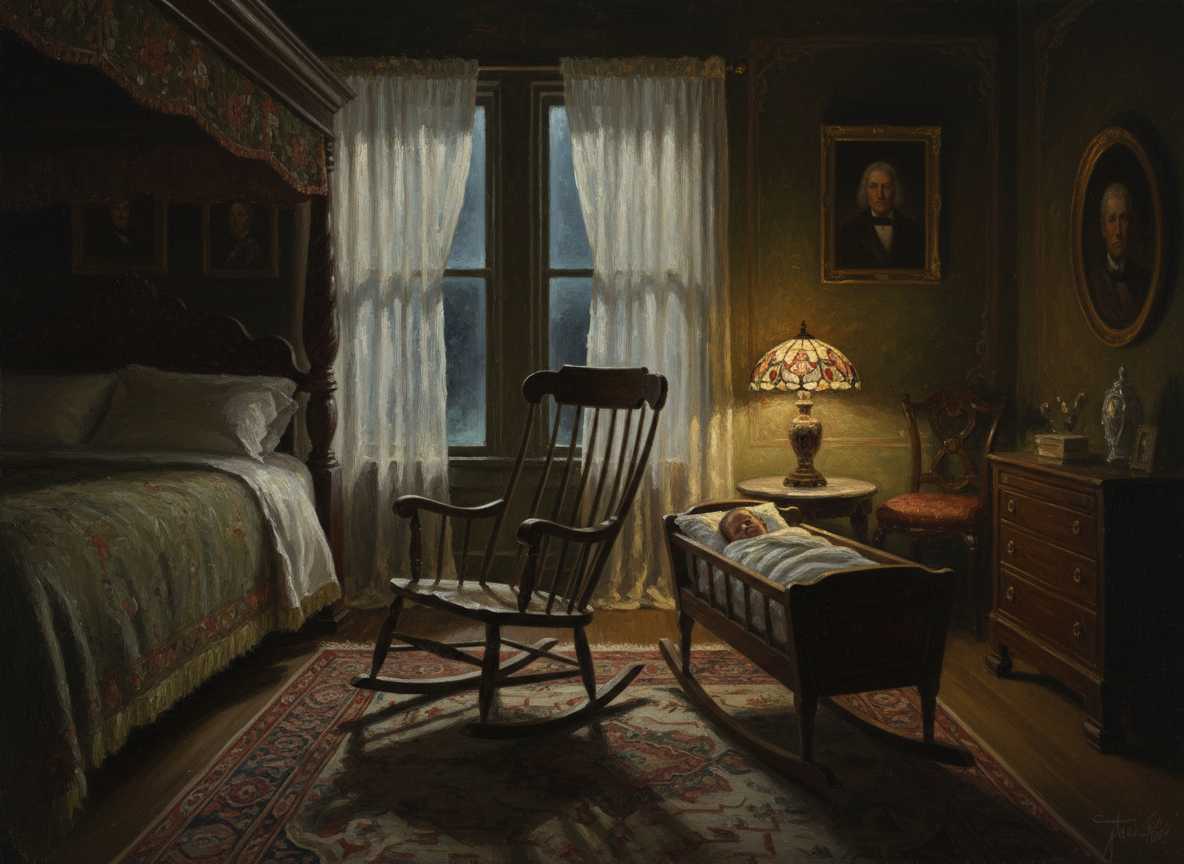
He glanced toward the far corner of the room, where an old wooden rocking chair stood, out of place among the gleaming metal and plastic. It was still.
As Naomi kissed their son’s damp forehead, whispering promises only he and perhaps some listening spirit could hear, Solomon wondered where his other child—the one who had quickened the second heartbeat—had gone, and what, exactly, had been born in this room beyond the boy who now cried himself hoarse on Naomi’s chest.
Part Eight — The Rocking Chair
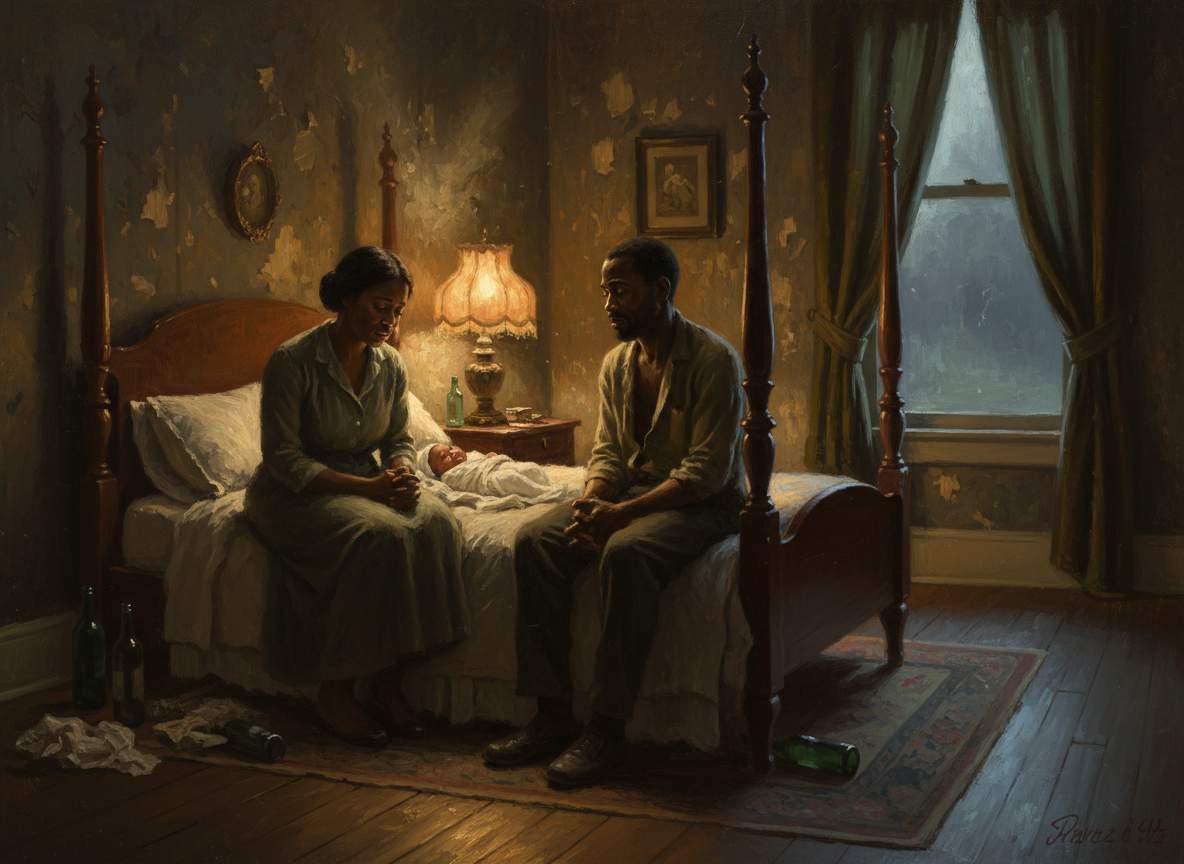
The hours after birth unfolded in a soft, exhausted blur. Nurses came and went. Forms were signed. Naomi drifted in and out of sleep, her hand never far from the small bundle in the bassinet beside her bed. Solomon moved between them and the window, unable to be still, as if some danger might slip in through the cracks if he relaxed his guard.
Toward evening, as the light outside turned the color of cooled ashes, he noticed a movement in the corner of the room. The rocking chair—the old wooden one he had thought out of place—was moving. No one sat in it. The curve of the seat was empty, the air above it clear. Yet the chair rocked, slow and steady, as if bearing the weight of an invisible body.
He watched, breath caught somewhere high in his chest. The motion was not violent, not the jarring back-and-forth of some haunted tale. It was gentle, the kind of rocking meant to lull, to comfort.
He moved toward it, each step measured. Chairs do not move on their own, he told himself. Floors are uneven. Drafts stir things. The world is made of simple causes. Still, his hands trembled as he took the thin hospital blanket from the foot of Naomi’s bed.
He laid the blanket carefully over the back of the chair, the way Ida had once done at home in winter. As the cloth settled, the chair’s motion slowed, then ceased altogether. For a moment the room felt crowded, the air thick with unspoken gratitude or resentment—he could not say which.
“Celestine?” he whispered, his voice too low to carry beyond the small orbit of wood and cloth.
Behind him, Naomi stirred. The baby whined in his sleep, a thin squeak of protest against some minor discomfort. Solomon turned back to the bed.
“Naomi?” he said softly. “You waking up?”
Her eyes fluttered open, pupils slow to find him. For a heartbeat she was only herself, confused and bone-tired. Then a shadow passed through her gaze, a deepening that was more than fatigue. When she smiled, it was Celestine’s wry, familiar curve of lip.
“Hey, Solomon,” she said, voice hoarse but playful. “You want to hold your son?”
He stared at the bundle in the bassinet. The boy slept on, fist curled by his mouth, the rise and fall of his tiny chest hypnotic. Fear and longing wrestled behind Solomon’s ribs.
“How can I?” he asked, the question heavier than its four words. “How can I hold him knowing there’s another…that there might be…” He faltered, groping for language big enough for what he imagined: a body holding two souls, one new, one ancient.
In his mind, a wild, impossible plan had taken shape in the watching nights of Naomi’s pregnancy. A way to keep his first love from drifting away into whatever blankness waited beyond. A way to give Celestine a body again, however borrowed.
“I thought…” His throat worked. “I thought maybe I could let my spirit son inside my physical son’s body. That you—that he—could be both. That I could hold you that way.”
Celestine’s expression hardened, a storm drawing itself tight behind Naomi’s tired features.
“No,” she said, each letter a stone. “I will not allow it. This is my son, and I will not turn him into some vessel for your fear of losing me. He deserves his own life. His own self.”
Her fury was not theatrical; it was righteous, the kind of anger born of long yearning and sudden, precarious fulfillment.
“You don’t understand,” Solomon said, though he heard, underneath her words, the echo of truth. “I wanted to give you what death took away. A body. A child. A way back to the world.”
“And I wanted,” she shot back, tears bright in Naomi’s eyes, “a child who was not an answer to your grief but a testament to our love. This boy is not a solution. He is a person. I will not let you make him your shrine.”
The clarity of her refusal cut him. He saw, in a flash that felt like lightning through water, how narrow his plan had been, how much it centered his own ache rather than the child’s right to exist unburdened.
Before he could apologize, the room shifted again. The tension in Naomi’s shoulders drained; her breathing steadied. Celestine’s hold slipped like a hand loosing its grip. Naomi blinked rapidly, her face smoothing into simple, human exhaustion.
“Is he okay?” she asked, already reaching weakly toward the bassinet. “Can I hold him?”
Solomon lifted the child carefully, the small weight both unfamiliar and intimately known. As he placed Solomon Jr. into Naomi’s arms, he felt the ghost of another claim in the air, an invisible braid tying him to two women and one fragile future.
The rocking chair in the corner remained still, the blanket draped over its back like a hand that had done what it came to do and was now resting.
Part Nine — Celestine’s Apology
Days blurred into each other in the small orbit of newborn life. Night and day rearranged themselves around feeding, changing, soothing. Naomi moved through the fog of recovery with a kind of stunned devotion, eyes never far from her son’s face. Solomon hovered between them both, his own sleep rationed in small, unsatisfying portions.
Yet beneath the surface of this ordinary miracle, worry threaded itself through Solomon’s every thought. He had not felt Celestine’s presence since the confrontation in the hospital room. The absence, once a fact of life, now felt like a choice. Had he offended her beyond repair? Had his selfish plan driven her away from the child she’d longed for?
He watched Solomon Jr. for signs—a certain focusing of the eyes, a gesture too knowing for an infant. Every small twitch became, in his mind, a potential message. When the boy startled in his sleep, Solomon’s heart leapt. When he calmed at Naomi’s voice, he felt both gratitude and an irrational sting of jealousy on Celestine’s behalf.
One morning, as the first light edged the curtains, Naomi dozed in the rocking chair at home, the baby warm against her chest. Solomon sat at the table, hands curled around a cooling cup of coffee, his gaze distant. The house held that particular hush that comes just before a new day fully engages.
Naomi stirred. Her hand, which had been resting on the baby’s back, stilled. When she lifted her head, the set of her mouth had changed. She looked at Solomon, and he knew before she spoke.
“You worry too much,” Celestine said through Naomi’s lips, with that old half-amused chiding. “You’ll wear a groove in your mind.”
Relief crashed through him so suddenly he had to set the cup down lest it spill.
“You left,” he said. It came out more accusation than he intended.
She looked down at the sleeping boy. Her hand, Naomi’s hand, stroked his fine hair with infinite care.
“I was angry,” she admitted. “Jealous. I stood at the edge of something I’d always wanted and saw you trying to fold me into it in a way that would have smothered us both.”
He opened his mouth to defend himself, then closed it again. The impulse felt childish. She had, after all, been right.
“I’m sorry,” he said quietly. “I was afraid of losing you. I thought if I could find a way to keep you here, inside him, then maybe…”
“You wouldn’t have to face that some love can’t go back to what it was,” she finished for him. “Even if it refuses to disappear.”
She sighed, a sound layered with years. “I’m sorry, too. For shouting. For turning my joy into another weight for you. For forgetting, even briefly, that this child is not a consolation prize but a person who will one day stand and walk and ask his own impossible questions.”
She lifted her gaze to Solomon’s. “I will be with him,” she said. “But not like you feared. Not as a possession. As a presence. A whisper when he’s near water and can’t see the bottom. A warmth when he feels alone. I can’t be his body. But I can be part of his story.”
A single tear tracked down Naomi’s cheek, and for once Solomon did not try to parse whose it was. He crossed the room and knelt beside the chair, just as he had in the hospital, but this time his posture was not supplication so much as solidarity.
“Thank you,” he said. “For coming back. For staying. For loving him.”
Celestine smiled, small and luminous. “You always did talk too much when you were scared,” she said. “Hush now. He’s sleeping.”
As dawn widened outside, she receded, leaving Naomi’s features soft and puzzled. Naomi glanced down at the baby, then at Solomon’s damp eyes.
“Did I miss something?” she asked, half-joking.
He shook his head, the truth too large and tender to wield carelessly. “Nothing at all,” he said. “Everything’s right where it should be.”
Part Ten — Solomon Jr. Grows Up
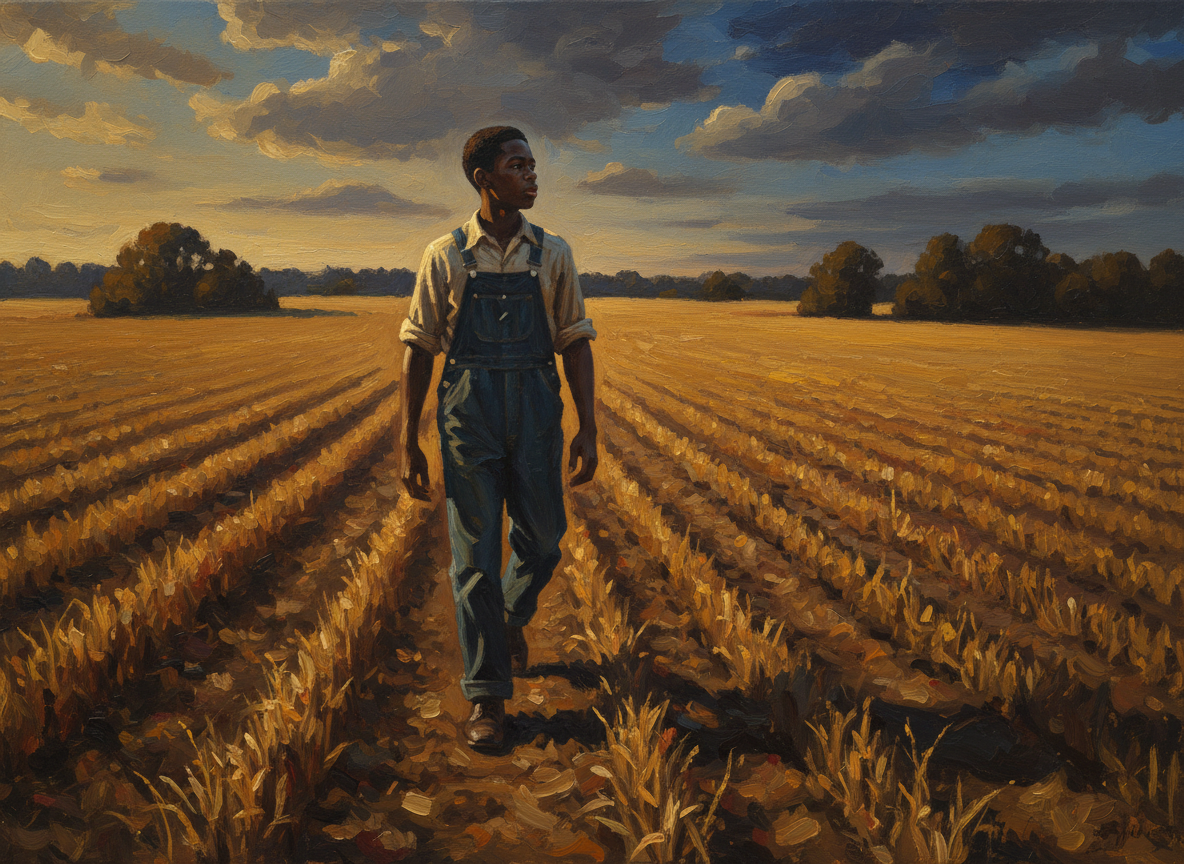
Solomon Jr. grew up under a sky that seemed, to him, endlessly wide and untroubled. The farm was his entire known world: the barn that smelled of hay and oil, the fields that changed color with the seasons, the kitchen where Naomi’s hands turned raw ingredients into comfort.
He knew, early, that he was loved. Naomi’s affection was a constant, ordinary miracle—the way she smoothed his hair before church, the way she tucked him in at night with stories that bent only slightly away from the truth. Solomon Sr.’s love was quieter, a deep river rather than a bright stream, expressed in the toys he carved from scrap wood, the way he let the boy walk beside him in the fields instead of sending him back to the house.
There was, too, the other presence. He could not have named it at first. It was simply the sensation, when he was very small, that someone was always just out of sight, as if an older sibling or invisible friend walked a step behind him. Once, when he fell and scraped his knee on the packed dirt by the shed, he felt not just Naomi’s arms around him, but a second, softer reassurance like the memory of a lullaby he was certain he’d never heard.
As he grew, he noticed that sometimes when Naomi was tired her voice changed. She would call him “little river” instead of “little man,” a pet name that made Solomon Sr. look up sharply from whatever he was doing. On those days, his father’s eyes would shine with both joy and something like sorrow as deep as the old well at the edge of the property.
“Who’s Geni?” Solomon Jr. asked once, around the age when children begin collecting questions as if they were stones. Naomi had been humming in the kitchen, and the name had slipped out of her mouth the way steam escapes a pot.
Naomi froze, wooden spoon hovering above the pot of beans. Solomon Sr., at the table, went very still.
“Where did you hear that?” Naomi asked, too briskly.
“You said it,” he replied, unfazed. “You said, ‘Hush now, Geni,’ like you were talking in a mirror.”
Naomi’s eyes flickered to Solomon Sr., seeking a cue. He gave the smallest shake of his head, a silent not yet. She turned back to the boy with a smile that didn’t reach all the way up.
“Geni’s just a name from an old story,” she said. “Finish your cornbread before it gets cold.”
The questions did not stop. They only grew more precise with age. Why did his mother sometimes stare at the rocking chair in the corner of the living room as if listening? Why did his father leave an extra place set at the table on certain anniversaries and then remove it, wordless, before anyone sat down? Who was the woman in the faded photograph on the bookshelf, the one with the scarf tied neatly at her throat and a smile so familiar it made his chest ache?
When he was ten, he found Naomi in the bedroom, holding that photograph. Her thumb moved back and forth across the image’s face with a tenderness he had thought reserved only for him.
“Is she family?” he asked from the doorway.
Naomi hesitated, then nodded. “Yes,” she said. “In a way that’s hard to explain.”
It was Solomon Sr. who finally decided that silence had become a heavier burden than truth. One winter evening, when the fields lay sleeping under frost and the three of them sat by the stove with their hands wrapped around mugs of hot cider, he cleared his throat.
“Son,” he began, “there are things about this family I’ve not told you. Things I didn’t think you were ready for. But you’re getting older. You’re asking the right questions.”
Naomi looked down into her mug, knuckles white. Solomon Jr. straightened, that invisible companion in his chest sitting up with him.
Slowly, haltingly at first, then with the momentum of long-suppressed narrative, Solomon Sr. told the story. About Elias and Ida and the half-broken house that had become a home. About Celestine, the girl with the scarves and the quiet laugh, the lake, the bees, the grief. About Naomi’s arrival and the nights when another voice had spoken through her. About the second heartbeat on the machine and the rocking chair that moved on its own.
He spoke not as a man spinning a ghost tale to frighten a child, but as someone offering a carefully plotted map of how they had arrived here, hoping it might help his son navigate the terrain of his own heart.
When he finished, the room felt both larger and more intimate, as if a new wing of their shared house had been opened.
“So I’m…” Solomon Jr. began, then stopped, searching for the least ridiculous way to say it. “I’m hers, too? In some way?”
“You’re Naomi’s son,” Naomi said quickly, a tremor in her tone. “And Solomon’s. That’s the truth the town would understand.”
“And Celestine’s,” Solomon Sr. added, meeting his son’s gaze squarely. “Not by blood or law. But by intention. By love. She wanted you before you existed. She spoke to you before you took your first breath. She’s been with you in ways you’ve felt even if you didn’t have a name for it.”
Solomon Jr. let this sink in. Strangely, it did not feel like an intrusion on his sense of self, but an expansion.
“I always thought,” he said slowly, “that when I’m scared, or when I’m alone in the barn and the wind’s making that awful noise through the boards, I hear someone telling me to breathe. I thought it was my imagination.”
Naomi reached across and took his hand, squeezing. “Maybe it’s your other mother,” she said, the words tasting strange and right all at once.
In the months that followed, the story settled into him. He thought of Celestine often—not as a rival to Naomi, but as a second river feeding the same field. Sometimes at night he would whisper into the dark, “Are you there?” and feel, not an answer exactly, but a kind of attentive silence, like the pause before a beloved friend speaks.
He began to walk the farm with a different awareness, seeing not just the present but the layers of time embedded in it: the porch post his grandfather had straightened, the tree his grandmother had planted, the lake where a boy had once pushed a girl in and changed both their lives. He understood, in a way that was visceral and wordless, that he was the living intersection of many choices, many losses, many stubborn hopes.
Part Eleven — The Lightning Strike
On the day the storm came, Solomon Jr. was twelve and as tall as Naomi’s shoulder. He and his father were in the west field, mending a section of fence that the winter winds had worried loose. The air that morning had been bright, the sky a hard, brittle blue. By midday, a bank of clouds gathered on the horizon, dark as spill ink.
“We should head in,” Solomon Sr. said, glancing up. “Storm’s moving quick.”
They hefted their tools, started back across the field. The wind picked up, tugging at their clothes, flattening the grass in long, restless strokes. The first low growl of thunder rolled across the sky, followed by the metallic scent of ozone.
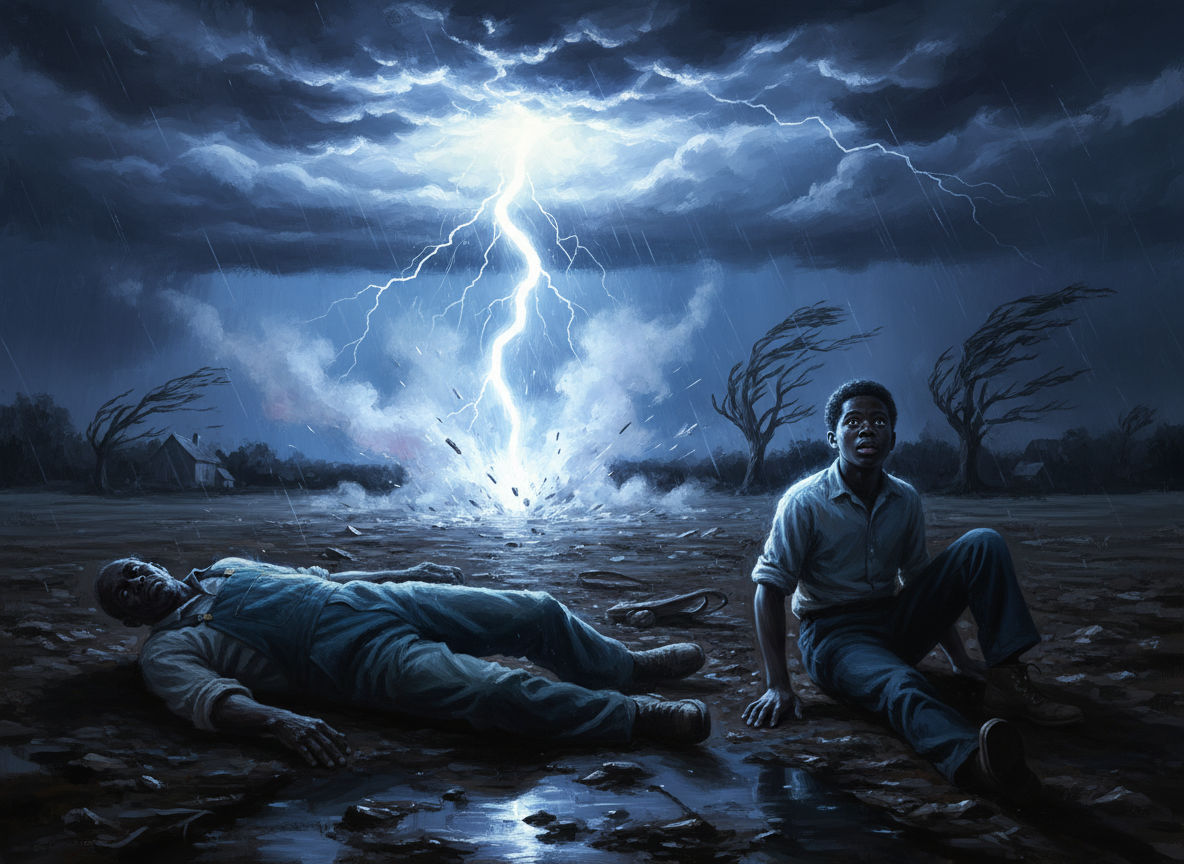
They were halfway to the house when the world split.
Later, when he tried to describe it, Solomon Jr. would say it was as if the sky had exhaled a blade of light. The flash came first, an all-consuming white that erased detail. The sound followed an instant later, impossible in its volume, a crack that seemed to originate inside his own bones.
A lightning bolt struck the ground a few yards away, tearing a scorched wound into the earth. The force knocked them both flat. For a moment, there was no up or down, no field or sky, only a roaring emptiness followed by a silence so profound it rang.
Solomon Jr. lay on his back, the world swimming slowly back into focus. The clouds churned overhead, their undersides bruised purple. Rain began in tentative spits, then thickened. He tasted metal and dirt. His limbs tingled, as if charged.
Beside him, his father groaned, rolling onto one elbow. “You all right, son?” he shouted, though his voice sounded far away, as if coming down a long tunnel.
Solomon Jr. pushed himself upright. His heart hammered, not just with the aftershock of fear but with something stranger, a sensation like a door swinging open somewhere inside his chest. The air around him felt different, charged not only with static but with presence.
“I feel…” He groped for words, always inadequate tools. “I feel strange, Papa. It’s like something has changed inside me.”
Solomon Sr. looked at him sharply, some old, half-forgotten dread flickering to life. For a heartbeat, in the boy’s face—in the angle of his jaw, the set of his eyes—he saw not just Naomi and his own features, but a third line, one that traced back to a girl with a blue scarf and a stubborn streak.
“You’re sure you’re not burned?” he asked, scanning the boy’s arms for marks. There was a faint redness along the hair on his forearms, as if static had risen and then dispersed, but no obvious wound.
“I’m not hurt,” Solomon Jr. insisted. “Just…different.”
Inside, something stirred. A voice, softer than Naomi’s, different from his father’s, spoke not in words but in a flood of impressions: the feel of lake water closing over a body, the taste of honey in tea, the warmth of a scarf being tied around a child’s neck. It was as if someone had opened a trunk in a room he’d never entered and the scent of old, beloved things had rushed out.
He staggered. His father’s hand shot out, steadying him.
“Easy, now,” Solomon Sr. said. But there was wonder in his voice, and fear, and something else that might have been recognition.
They made it back to the house through rain that now fell in heavy sheets. Naomi met them at the door, eyes wide, hands flying over their damp clothes, checking for injury. When she was satisfied they were intact, she launched into a tirade about storms and fools and the precise distance one ought to keep from open fields during thunder.
Solomon Jr. let her words wash over him. Inside, a new quiet had settled. The door that had swung open stayed open. In that inner room, someone older and endlessly patient took up residence.
Little did any of them fully grasp, in that rattled, rain-soaked evening, that the lightning had done more than score the earth. It had fused timelines. It had given Celestine a new, more intimate foothold in the world of breath.
Part Twelve — The Legacy
In the years after the storm, Solomon Jr. learned to live with the presence inside him the way one learns to live with a new limb or a long-healed scar. At first it startled him—the sudden, vivid memories that were not his, the way his hand sometimes reached for a scarf to wrap around his neck on chilly mornings he would otherwise have braved bare-throated.
He would be in the barn, oiling a harness, when a thought not his own would drift into his mind: Don’t forget the stitching on the left strap. It frays quicker. Or he’d stand at the edge of the lake, watching storm clouds gather, and feel a gentle, amused caution: Beautiful, isn’t it? But respect the deep.
At first he wondered if he was going mad. Then he remembered his father’s story, the double heartbeat, the rocking chair, the apology at dawn. On a quiet evening, sitting alone on the porch while Naomi and his father washed dishes inside, he spoke aloud to the air beside him.
“Celestine,” he said, tasting the name. “Mama says you’re part of my story. Are you…are you part of me?”
The wind shifted, carrying the scent of rain-wet earth and something sweeter, like wildflowers by a long-remembered lake. Inside his chest, where the echo of lightning still lived, he felt an answering warmth.
Always, little river, a voice seemed to say, so soft he might have dismissed it as imagination if it did not fit so perfectly into the hollow he’d been carrying his whole life. Not to own you. Just to walk beside you.
He grew into his teenage years with that unseen companion. When he felt alone, there was a comfort that did not depend on walls or human proximity. When he made mistakes—forgot to close a gate, misjudged the weather, spoke harshly to Naomi in a moment of adolescent impatience—he felt not condemnation, but a quiet nudge toward making it right.
At sixteen, when a girl in town laughed at one of his awkward jokes and his heart did a stumbling dance in his chest, he walked home under a sky heavy with stars and felt Celestine’s amused, tender presence at his side.
Careful, she seemed to murmur. Love will undo you and rebuild you. But it’s the only thing I’ve ever found worth being undone for.
He did not tell many people about her. The world had little language for such arrangements. Once, in a rare moment of vulnerability, he asked his father, “Do you still hear her?”
Solomon Sr. was older then, his hair salted with gray, his hands more knotted than they’d been when he’d first pushed a girl into a lake. He looked out across the fields before answering.
“Not like you do,” he said. “For me she’s…in the spaces. In the way the light falls on the porch at dusk. In the smell of honey when I open the pantry. With you, she found a different way. A closer way.”
“Does it bother you?” Solomon Jr. pressed. “That she’s…here. With me.”
His father’s mouth curved, half-sad, half-humbled. “It comforts me,” he said. “To know that the love we had didn’t vanish when her body did. That it moved forward. That it helps you be kinder, braver, more yourself. That’s all I ever wanted for you, son.”
Naomi, for her part, loved her son with an unjealous ferocity. There were moments, early on, when she’d felt a green sting—watching him stare at the old photograph, sensing his fascination with the woman whose story preceded his own. But over time she came to see Celestine not as a rival but as a co-author of their family’s strange, intricate script.
“Tell her thank you,” she said to Solomon Jr. once, as they stood at the sink drying dishes. “For watching over you when I can’t. For loving you from whatever place she’s in.”
He nodded, throat tight, and later, alone by the rocking chair that had long since ceased its solitary movements, he whispered, “Mama says thank you.”
Celestine’s response was not in words. It was in the way his shoulders relajed, the way his breath came easier, the sudden, inexplicable certainty that he was held by more than the air.
He grew into a man who carried his history with conscious grace. He worked the same land his grandparents had coaxed from ruin, walked the same paths his parents had trod in grief and in hope. He made his own choices—some wise, some foolish—always with the sense that he was not walking alone. He cherished his bond with Celestine, not as a curiosity or a burden, but as a quiet, guiding star.
On evenings when storms gathered on the horizon and the sky lit briefly with distant fire, he would stand on the porch with Naomi and Solomon Sr., three silhouettes against the darkening fields. The rocking chair creaked softly beneath him. Somewhere inside, a voice he had come to trust would observe, with gentle humor, how small they were under such a vast, indifferent sky, and how immense their love nonetheless felt within it.
He came to understand, through all of this, that the family he belonged to was larger than blood, stranger than law, and more enduring than any one lifespan. It was a tapestry woven from careful plots and accidents, from promises kept and broken and remade, from griefs that refused to remain mere absence.
Standing one day at the edge of the lake where his father had once pushed a girl into the water on a dare of love, he watched bees move lazily between blossoms and felt the overlapping currents of time wash through him. He thought of Elias and Ida in their broken house, of Amos on his distant hill, of a blue scarf tied around a young woman’s throat by careful hands, of rocking chairs and hospital rooms, of lightning stitching heaven and earth together for one stunned second.
He thought of Celestine, who had refused to let death have the last word on her love. Of Naomi, who had opened her home and body to a story larger than any one woman should be asked to hold. Of his father, who had learned, slowly and with pain, that loving one person did not have to mean abandoning another.
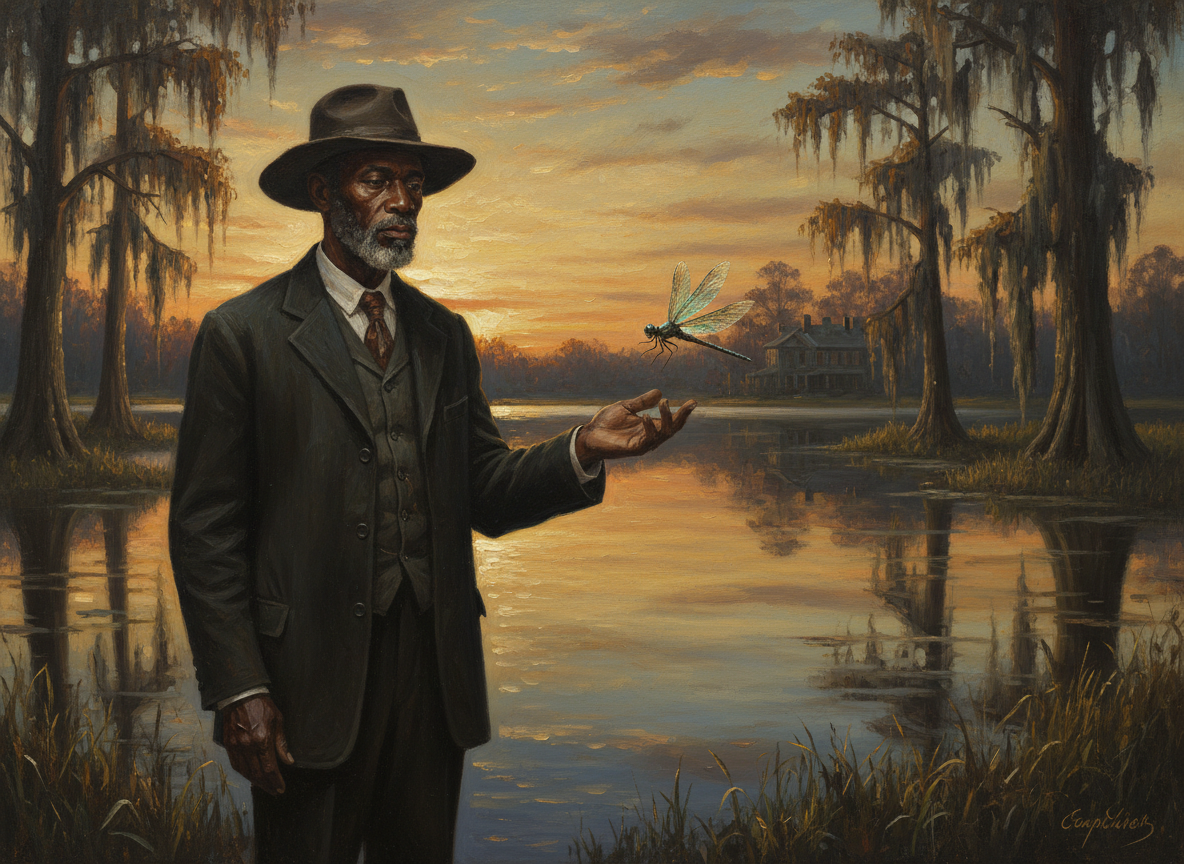
A dragonfly skimmed the water, etching brief, delicate patterns on the surface. The world went on: bees, storms, births, departures. Somewhere, an unseen heartbeat kept time with his.
Some love doesn’t end at death. It finds another way home.

