Xhale Chronicles
Seven
He was born inside the only world he knew. Until the world outside came for him.
Seven was born with a number and a gift. I named him after the age he taught himself to read a heartbeat. Some people carry medicine in their hands without ever going to school. — Xhale
For the ones whose gifts arrived before their freedom.
Chapter I
The Room With No Sky
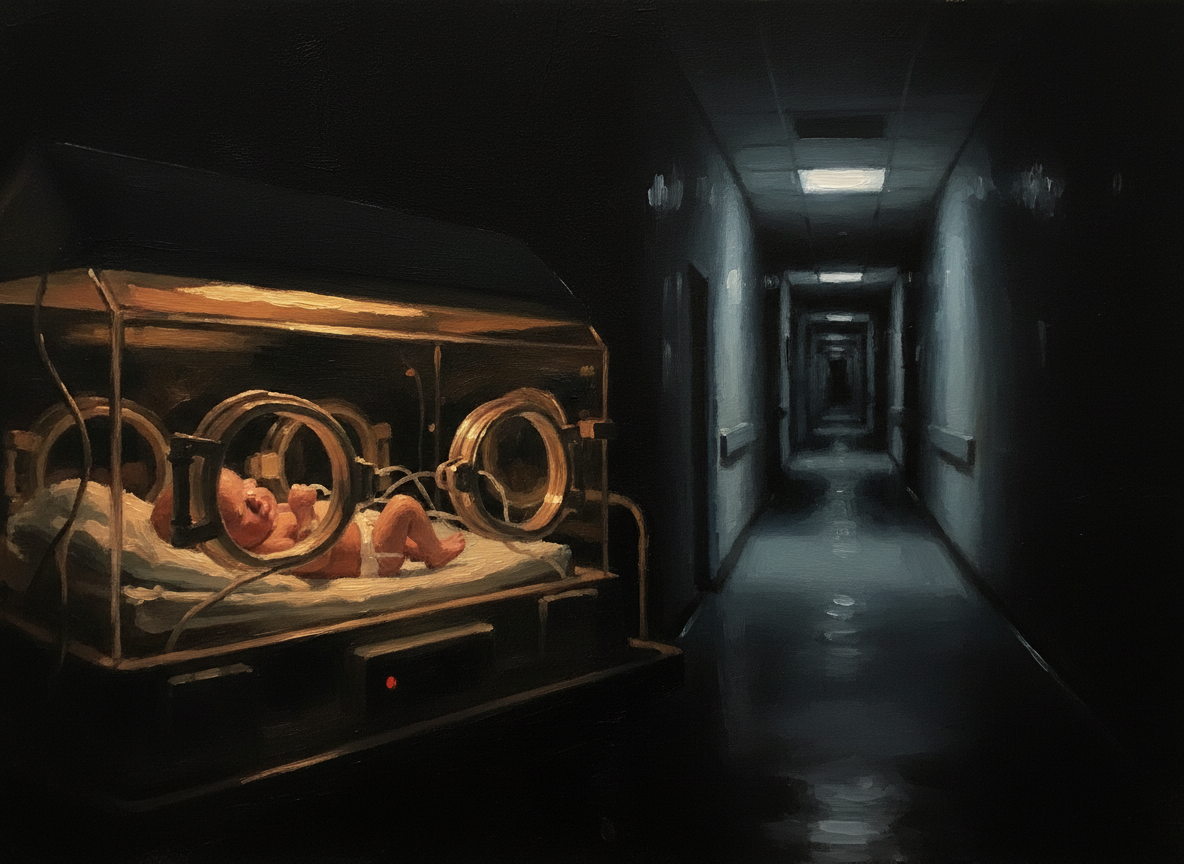
Seven was born three months early, in a hospital that would become his entire world. His lungs were small, his body fragile, but his eyes — from the very first day — were wide open. Wide and watching. The nurses said they had never seen a preemie so alert. Like he already knew something was waiting for him to figure out.
He had no name for two weeks. His mother, exhausted and afraid, kept saying, “Not yet.” On the fourteenth day, the attending physician — a tall man with silver glasses — stood at the incubator and counted aloud the number of times the baby’s heart had stabilized itself without intervention. Seven times. He said it almost to himself. The mother heard it and nodded. “That’s his name.”
Chapter II
The Boy Who Read Hearts
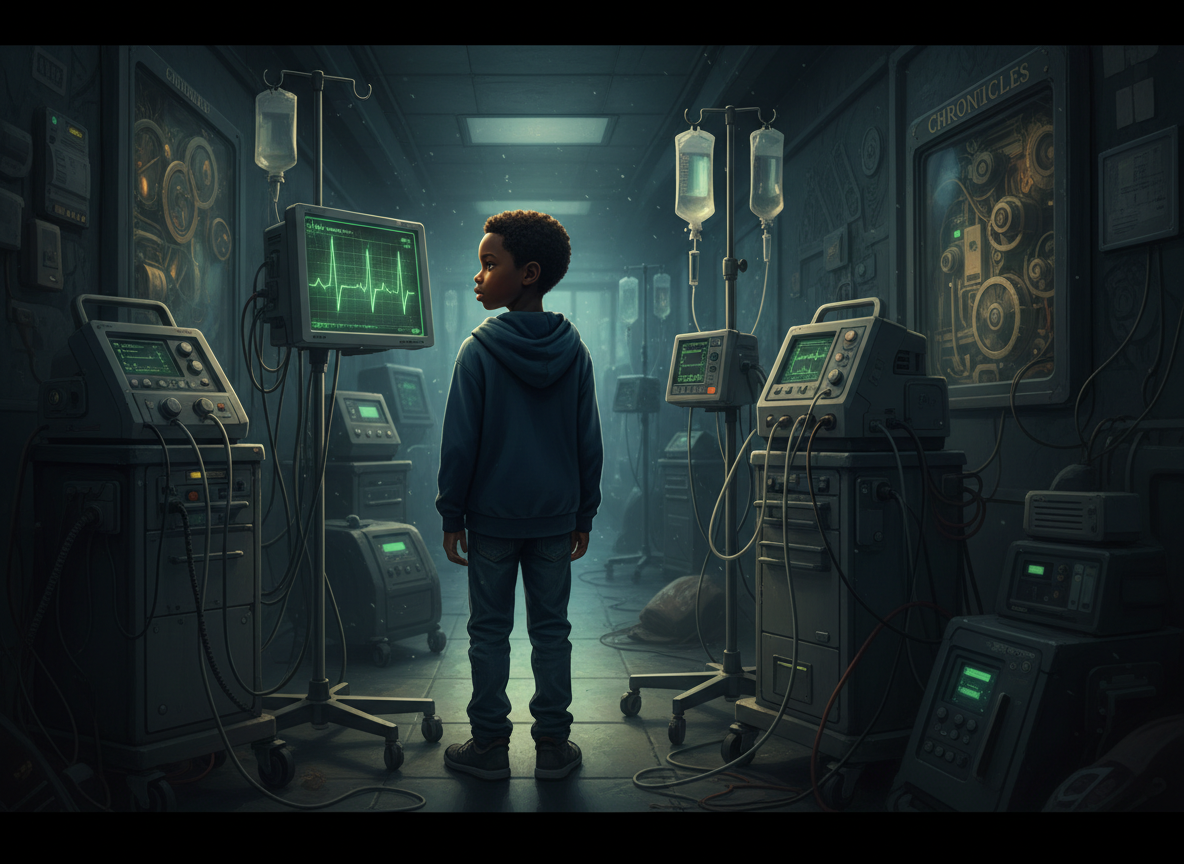
By the time Seven could walk, he was following the nurses. Not to play. To watch. He stood at the foot of beds and studied the monitors. By age four he could tell, just by listening, when a patient’s breathing had changed. By five, he was quietly correcting EKG readings — pointing at the paper tape and saying, “That one’s off.” The nurses laughed. Then checked. Then stopped laughing.
At seven — his namesake age — he sat beside a dying man and held his hand for four hours. He told no one why. When the man passed, peacefully, the family asked who the boy was. A nurse said she didn’t know. Seven had already gone back to his room and was asleep.
Chapter III
The Miracle They Filed Away
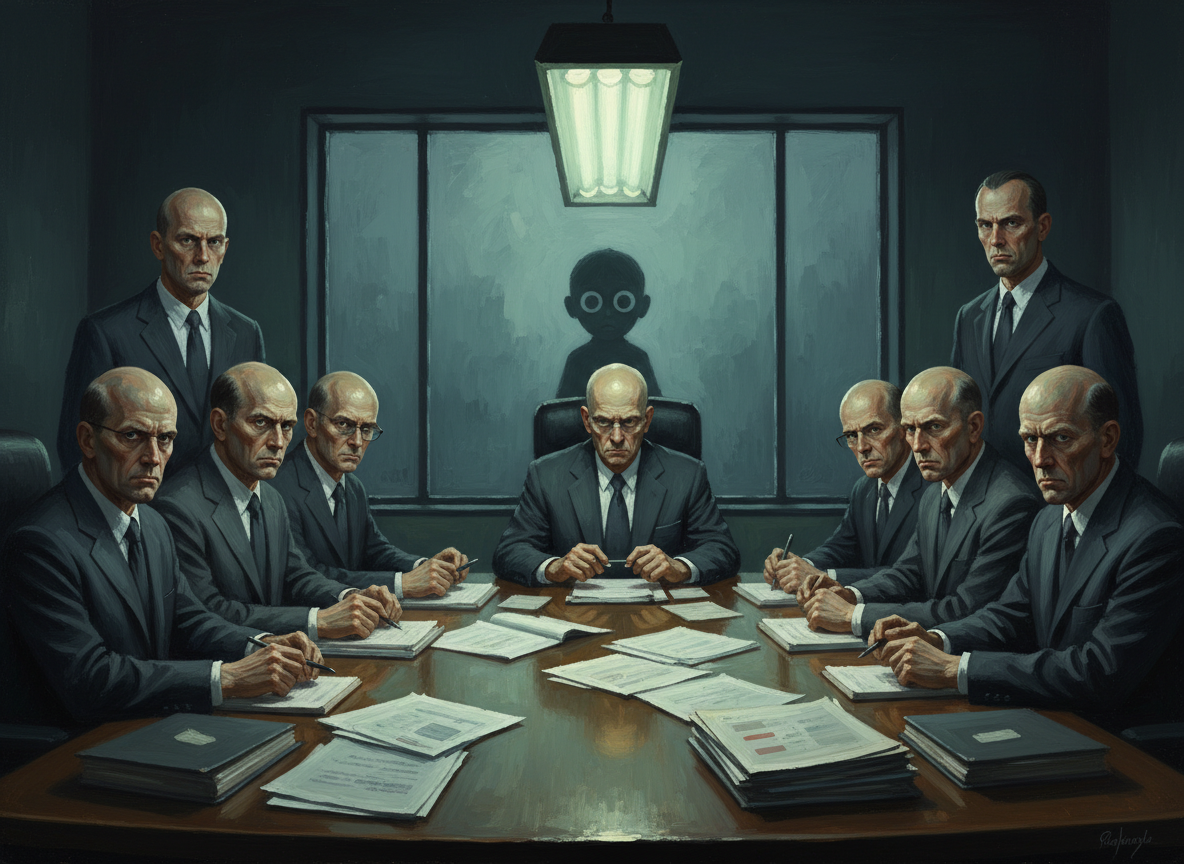
Word traveled. Quietly at first. A cardiologist mentioned Seven in a conference. A researcher asked to observe him. The hospital’s board of directors convened three times in one month. The question was never about Seven’s gift. The question was about liability. About optics. About what happens when a child who has never left a hospital becomes the most competent presence in it.
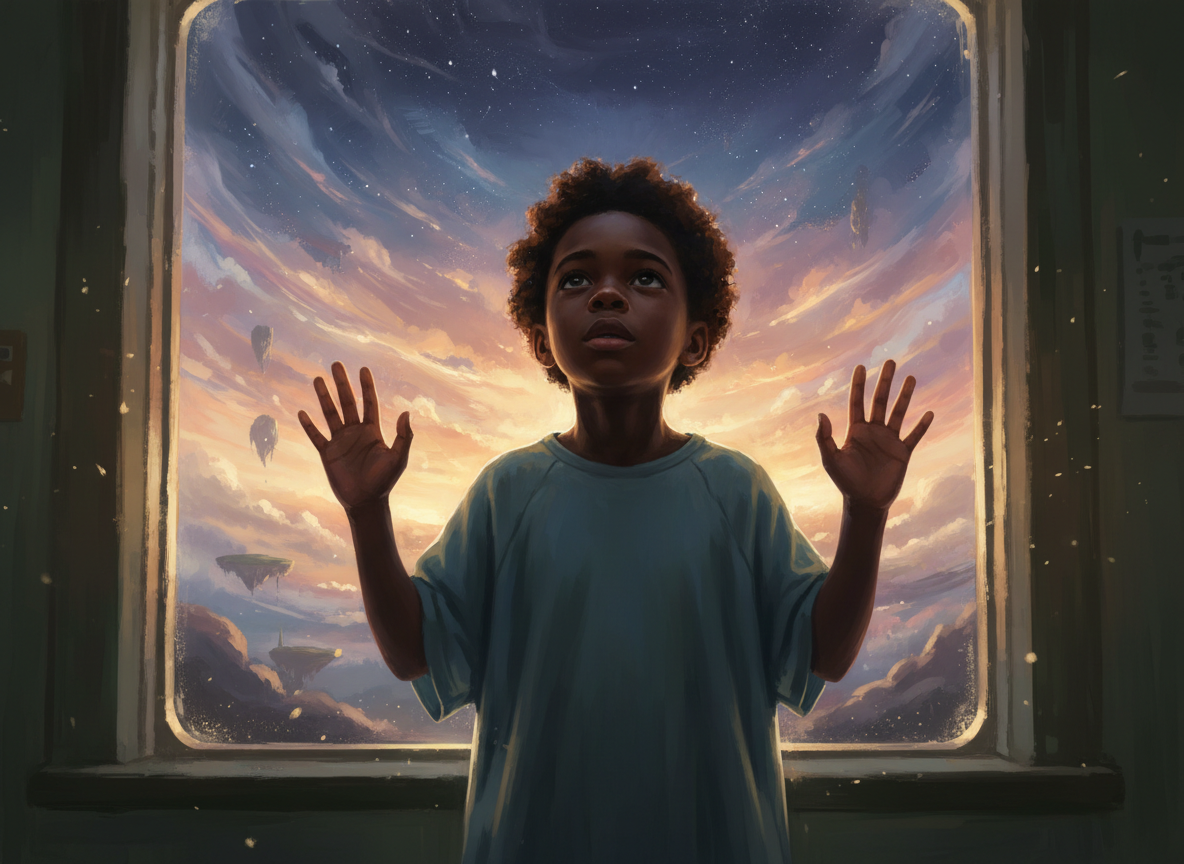
They drafted a transfer order. A facility upstate. Specialized, they said. Educational. Seven listened through the wall. He didn’t cry. He went to the window at the end of the hall — the one that looked out over the parking lot and, beyond it, the edge of a park — and he pressed his hands flat against the glass.
Chapter IV
What the Sky Looks Like
He had seen the sky before. Through glass, through screens, in the photographs families brought in and taped above their loved ones’ beds. He had catalogued it the way he catalogued everything — carefully, quietly, completely. He knew the difference between cumulus and stratus. He knew that the sky at dusk went amber before it went dark. He knew all of this without ever having felt wind.
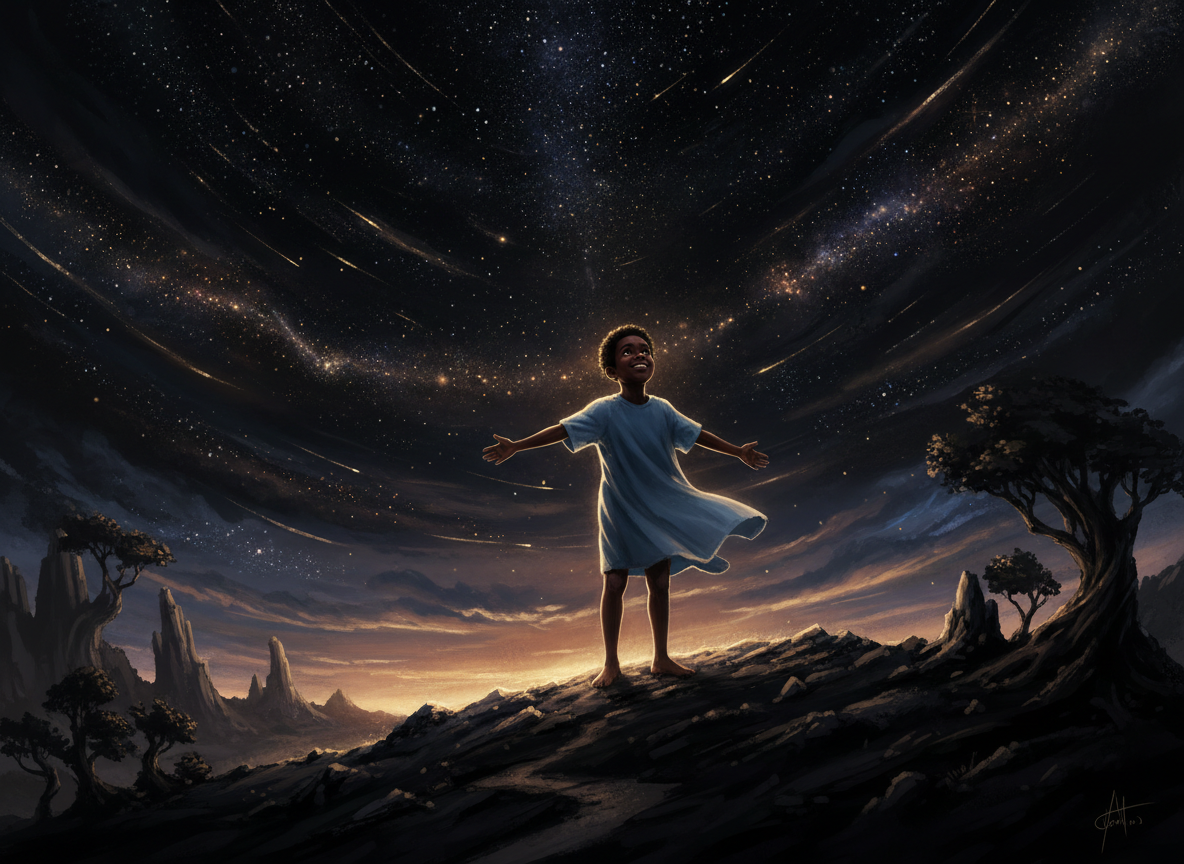
The morning before the transfer, a nurse he trusted — a woman named Celestine — took him outside through the service entrance. Just for ten minutes, she said. No one has to know. Seven stood on the concrete in his hospital socks and looked up. He didn’t speak for a long time. Then he said: “It’s bigger than I thought.” Celestine asked if that was good. Seven said, “It means there’s more to learn.”
Chapter V
Seven
He went to the facility upstate. He learned. He returned. He finished what the hospital had started in him, and then he went further. He became the kind of doctor who sits with people before he diagnoses them. Who listens to the room, not just the patient. Who can tell, without a single instrument, when something is wrong — and what it needs.
They ask him sometimes where he trained. He names the hospital. They nod, assuming a residency, a fellowship. He doesn’t correct them. What would he say? That he was raised by the dying? That grief was his first teacher? That a woman named Celestine once gave him ten minutes of sky and it was enough to build a whole life on?
His name is Seven. He was born knowing how to count what mattered. He never stopped.
“Some gifts don’t need a classroom. They need a witness. — Xhale”

