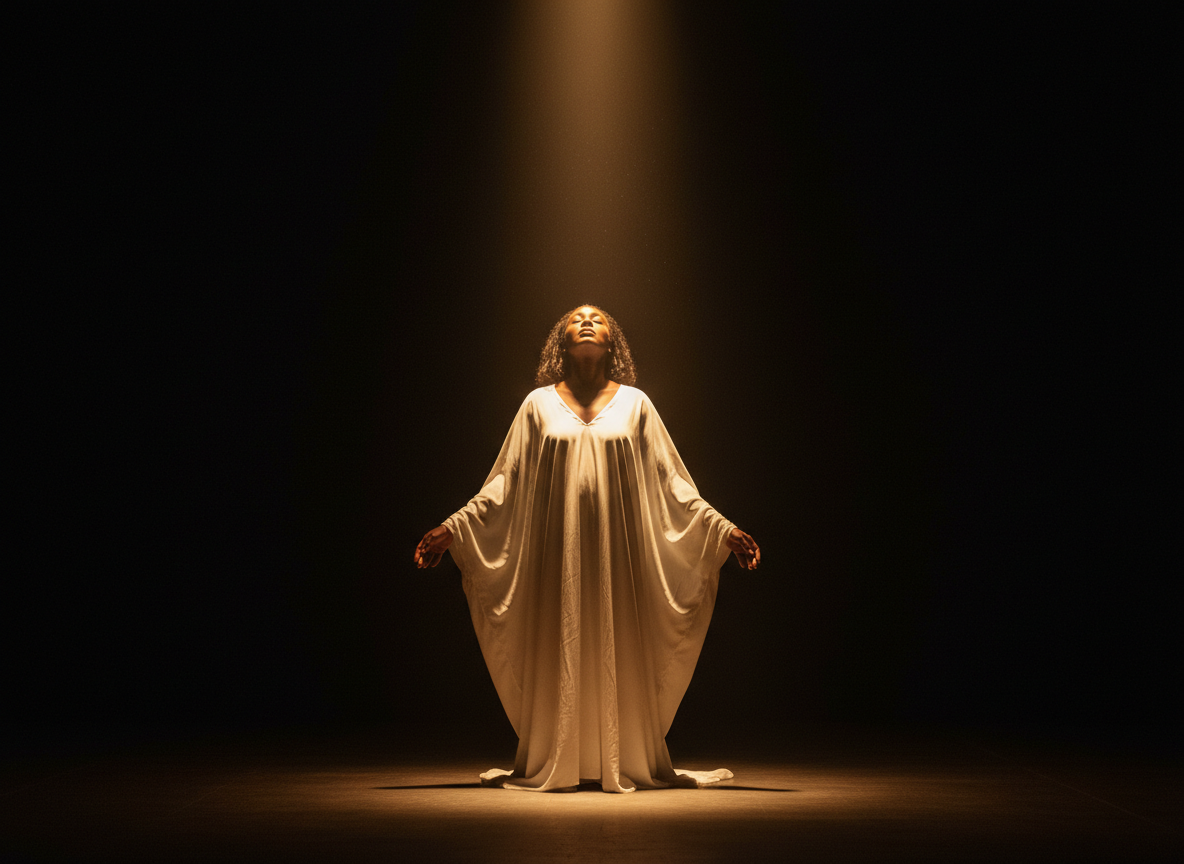
I Died
I died.
And I never knew
how to live again.
Then came this death—
and somehow,
this death felt okay.
I began learning
how to sit beside it,
to understand what it came to teach me.
I fell in love with the misery,
not because misery was beautiful,
but because it stripped me
of everything I thought I needed.
In this death,
I learned things about myself
I had never been willing to see.
I learned I didn’t have to rush.
I didn’t have to chase.
I didn’t have to prove.
I didn’t have to answer
every hunger inside me.
Even doubt became something beautiful—
a quiet place
where I could finally question
who I thought I was.
I tried to die once.
But what I really wanted
was for the person I had become
to finally stop hurting.
The ego had to die.
The fear had to die.
The woman who believed
she had to disappear
to be loved—
she had to die.
And now I understand:
If I am going to live again,
I will have to stretch beyond
everything I have known.
I will have to lift my head.
I will have to call myself
by the name I buried.
I will have to become happy
without apologizing for it.
I will have to look at myself
and believe the woman staring back
is still worthy of being here.
Because in this death,
I discovered something strange:
I don’t need an ego
to know that I am loved.
I don’t need a name
to know that I belong.
I can die for love.
I can die for God.
I can die to the person
I thought I had to be.
But I don’t have to die
to disappear.
I can die
and still become.
God didn’t ask me
to destroy my life.
He asked me
to surrender the flesh—
the fear,
the pride,
the shame,
the false self
that kept me from knowing
what was already alive inside me.
So yes,
I died.
But maybe this death
was never the end.
Maybe this was
the first breath
of the woman
I was always meant to become.
And now—
I have to learn
how to live.

